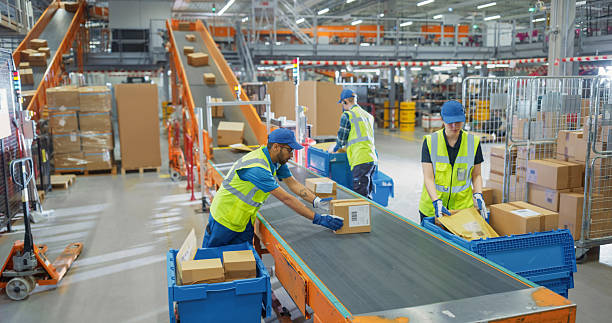
“Warehouse worker” sounds like one job. Inside the building it is at least five, and which one you land shapes everything: how much you walk, what you lift, whether your hours sit in daylight or in the middle of the night, and how quickly the work starts to feel routine. Warehouse jobs stay near the top of hiring boards in most metro areas because goods keep moving in every economy — but the people who last in them are usually the ones who knew which corner of the floor they were signing up for. This is the first month, described the way a coworker would describe it.
The five warehouse jobs inside the job
Receiving crews unload trailers and check freight against paperwork; it is the most truck-paced work in the building, busy when a trailer docks and quiet when it does not. Pickers walk the aisles filling orders with a scanner in hand — this is the role behind the famous step counts, and accuracy matters as much as speed. Packers box, label, and stage finished orders, a station job with more standing than walking. Forklift operators move pallets between dock, racks, and staging, and the seat usually requires the employer’s own certification and a clean safety record. Inventory and quality roles count, audit, and hunt discrepancies; they suit people who would rather solve a puzzle than chase a pace clock. Most new hires start in picking or packing and move sideways from there, which is why the CareerOneStop occupation profiles, maintained by the U.S. Department of Labor, are worth a read before you apply — they describe these roles separately instead of lumping them together.
A shift, hour by hour
The rhythm is set by the trucks, not by you. Many facilities front-load the shift: a quick team huddle with the day’s targets and safety note, then the heaviest volume lands early as trailers are worked and orders released in waves. Breaks come on a fixed bell, not when you feel tired, and the last hour often belongs to cleanup, staging for the next shift, and the small administrative tail of scanning and reporting. Pace is measured — scanners timestamp the work — and new hires are normally given a ramp-up period before the standard rate applies. Ask in the interview how long that ramp is; a facility that answers precisely is telling you something good about how it manages people.
The physical screening nobody warns you about
Job posts say “must be able to lift” a stated amount and “stand for long periods,” and both phrases deserve to be taken literally. The real test is not one heavy box; it is moderate weight, hundreds of times, at pace, in a building that is cold in winter near the dock doors and warm in summer at the top of the racks. Sensible operators run post-offer physicals or essential-function tests for the heavier roles. Be honest with yourself about knees, backs, and feet before you accept, because the probationary period is the worst possible time to discover the mismatch. The Occupational Safety and Health Administration’s warehousing page lists the industry’s real hazards — forklifts, ergonomics, slips, heat — and reading it doubles as interview preparation: facilities with serious safety cultures recognize the vocabulary.
Schedules, overtime, and the temp-to-hire door
Warehouses run when trucks run, which means second and third shifts, weekend rotations, and seasonal surges where overtime stops being optional. Shift differentials — extra pay for nights — are common, and the honest way to compare two offers is total weekly earnings at the actual schedule, not the headline hourly rate. A large share of hiring flows through staffing agencies on a temp-to-hire basis: you work an initial period as the agency’s employee, then convert to the company’s payroll if attendance and pace hold up. That door swings both ways — it is a genuine trial for the employer and for you. Before signing, ask what share of agency placements convert, and when. The federal job-search hub at USA.gov links to state workforce agencies, which often know which local facilities hire directly.
Safety is a skill, not a poster
The experienced workers in a warehouse share a look: they scan intersections before crossing them, they never walk under a raised load, they lock out equipment without being asked, and they report the wobbly pallet instead of walking past it. That awareness is learnable and it is the fastest route to being trusted with the better roles — equipment operation, training new hires, quality checks. It also travels. The same habits are prized in construction jobs and across the skilled trades, and supervisors deciding who gets promoted tend to promote the person other workers are safer around.
Questions worth asking before you accept
Five questions separate a good warehouse job from a bad one. What role am I actually being hired into, and where will I spend most of the shift? What is the ramp-up period before full pace applies? Is overtime voluntary or mandatory, and how much is typical in peak season? Does the temp period convert to direct hire, and on what timeline? What does the path to equipment certification look like, since the forklift seat is where the pay steps begin? Workers who want the driving side of logistics instead can compare with our guide to pickup driver opportunities, and those who prefer making things to moving them often land on careers in welding. Warehouse work, taken with open eyes, offers something increasingly rare: a job where reliability alone still visibly compounds — into steadier shifts, certified skills, and a floor you can genuinely climb.