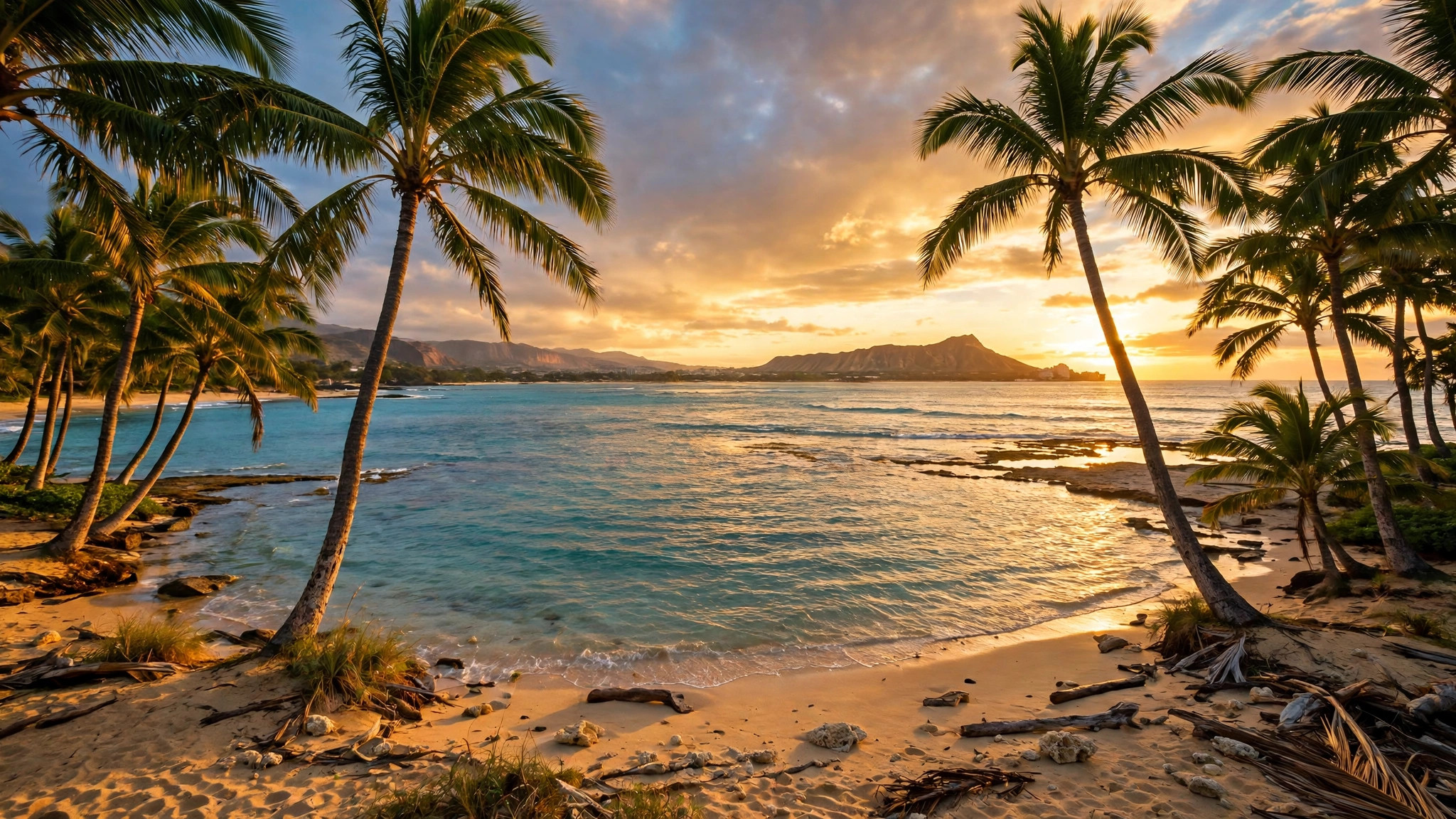
Hawaii looks simple on a postcard. Six islands, blue water, warm air. The hard part is picking one. Each island has its own pace, its own crowds, and its own kind of trip. Pick wrong and you spend a week wishing you were somewhere else in the same state.
The good news: there is no bad island. There is only a bad match. Start with what kind of trip you want, then let the island choose itself.
The six islands, in plain terms
Hawaii has six major islands visitors can explore: Kauai, Oahu, Molokai, Lanai, Maui, and the island of Hawaii, often called the Big Island. That is straight from the official Go Hawaii island guide, and it is the right starting point.
Oahu is the busiest and the easiest. Honolulu has the most flights, the most hotels, and the most to do without a car for every outing. Waikiki Beach, Diamond Head, Pearl Harbor, and big-city dining all sit on one island. If this is a first trip, or a shorter trip, Oahu is the safe pick.
Maui is the classic honeymoon and family pick. It mixes resort comfort with real adventure: the road to Hana, sunrise at Haleakala, snorkeling, and whale watching in season. It feels polished but not as city-busy as Oahu.
Kauai is the quiet one. It is called the Garden Isle for a reason. Think green cliffs, the Napali Coast, Waimea Canyon, and small towns. It suits travelers who want nature first and nightlife last.
The Big Island is the biggest and the most varied. Volcanoes, coffee farms, black-sand beaches, and snow on Mauna Kea in winter. You need more days here because distances are long. It rewards slow travel.
Molokai and Lanai are for a second or third trip. They are quieter, more rural, and less built up. Most first-timers should pick from the first four and save these for later.
When to go
Hawaii is warm all year, so there is no closed season. But the feel of a trip changes with the calendar. Summer brings warmer, drier weather and bigger crowds, especially around school breaks. Winter brings cooler air, bigger surf on north shores, and whale season.
On Oahu, average temperatures run roughly between the mid-70s and mid-80s, with summer (April through November) warmer and drier and winter (December through March) a bit cooler, according to Go Hawaii’s Oahu travel information. Trade winds keep things comfortable year-round.
Shoulder seasons are the sweet spot for many travelers. Late spring and early fall usually mean thinner crowds and easier restaurant and activity bookings. If your dates are flexible, try midweek flights and a stay that starts on a weekday. You will often find more room choices and a calmer resort.
Where to stay: resort, condo, or small hotel
Your lodging choice shapes the trip as much as the island does. Big resorts are easy. They bundle pools, restaurants, beach access, and activities in one place. They cost more, and they can feel like a world of their own. That is fine if the point of the trip is to relax.
Condos suit families and longer stays. A kitchen, laundry, and separate bedrooms make a week with kids far easier. They also let you eat some meals in, which keeps food costs down.
Small hotels and bed-and-breakfasts suit travelers who want local character. They are often in walkable towns rather than resort zones. Read recent reviews carefully and confirm what is included. Parking, resort fees, and breakfast policies vary a lot.
Wherever you stay, check the location before you book. A cheap room far from the beach can cost you an hour of driving every day. On the Big Island especially, pick a home base near what you actually plan to do, not just the cheapest listing.
Getting around
On Oahu, you can get by with a mix of bus, rideshare, and a rental car for a day or two. On Maui, Kauai, and the Big Island, a rental car is close to essential. Book it early. Cars sell out during busy periods, and airport counters run out of the cheaper classes first.
Plan one big activity per day, not three. Island driving is slower than it looks on a map. A single coastal drive, a hike, and a good dinner is a full day. Leave room for the unplanned stop, because that is usually the part people remember.
Money traps to avoid
Resort fees, parking charges, and activity markups add up fast. Before you book, ask for the total price with fees and taxes, not just the nightly rate. Compare the same room across two or three places before you commit.
Activities booked through a hotel desk are convenient, but they are rarely the cheapest option. Check the operator directly. For popular sights like Pearl Harbor or Haleakala sunrise, whether reservations or timed entry are needed well before you go.
Pack reef-safe sunscreen, a reusable water bottle, and layers for wind and rain. Island weather changes fast, especially on hikes and boat trips.
Sources
So here is the simple version. First trip or short trip: Oahu. Classic mix of beach and adventure: Maui. Quiet and green: Kauai. Big, varied, and slow: the Big Island. Pick the island that matches your pace, book your stay near what you will actually do each day, and leave room in the schedule for the island to surprise you. And once the island is picked, the stay is the part worth getting right. Booking through Hilltop Travel Co. lets you compare hotel prices and still pick up agent-level perks like room upgrades where offered, breakfast, WiFi, and VIP amenities at no extra charge for the benefit itself.
Want the full rundown on getting those perks without paying for an expensive agent or a premium card? Read The Hotel Booking Hack: Agent-Level Perks For Free. And if you still need to get there, see How to Find a Good Deal on Flights.