Nearly every diagnosis in modern medicine passes through a tube of blood, and someone has to draw it well. Career opportunities in phlebotomy begin with that simple fact: the phlebotomist is the person whose skill determines whether the sample the lab analyzes is accurate, sufficient, and collected from a patient who was treated with care. It is one of the fastest legitimate entries into healthcare work — training is measured in months — yet the role itself is not a shallow one. A good draw is a technical act, a safety act, and, for the anxious person in the chair, the part of the medical system they will remember.
Choose your setting: the same skill, four different jobs
Where you work reshapes the job more than the job description admits. Hospital phlebotomists move constantly — emergency departments, wards, early-morning rounds — drawing from patients who are elderly, dehydrated, medicated, or frightened, which makes the hospital the best school for difficult sticks. Outpatient laboratories and clinic draw stations run on rhythm instead: scheduled patients, high volume, and the efficiency of a well-run queue. Blood collection organizations employ phlebotomists for donation work, where the “patient” is a healthy volunteer and the screening conversation matters as much as the needle. Mobile phlebotomy sends you to homes, workplaces, and care facilities, trading supervision for independence — you are the whole team in the room. Research settings add protocol precision, since trial samples must be collected and documented exactly as the study demands. New phlebotomists often pick by temperament first and specialize later; the credential travels with you between all of them.
Training for phlebotomy is measured in months — here is what fills them
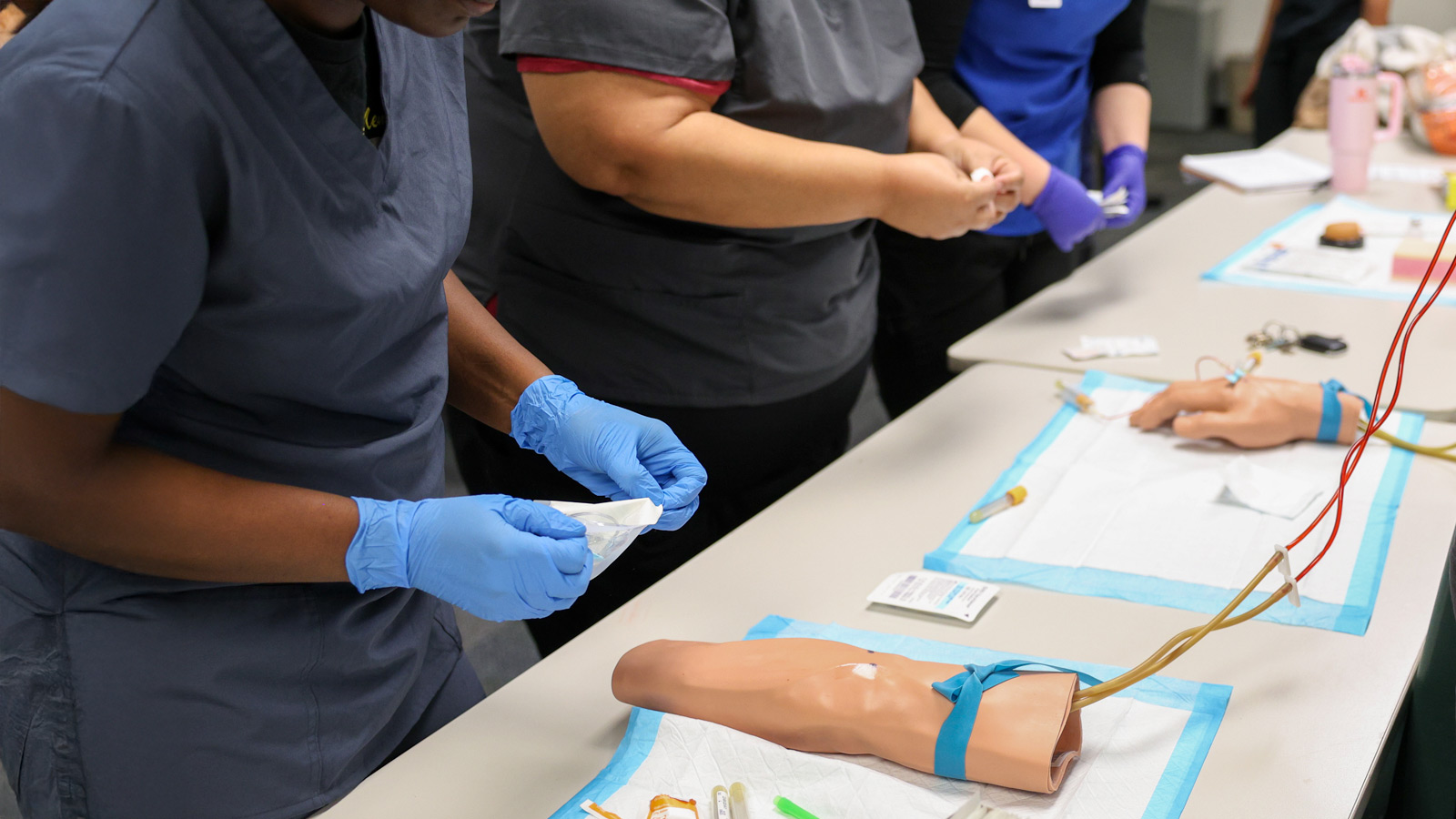
Programs are offered by community colleges, technical schools, and some employers, and they combine classroom work with supervised clinical practice. The syllabus is practical: anatomy of the veins you will actually use, the order in which tubes must be filled and why, infection control, patient identification and labeling discipline — the unglamorous steps where errors actually happen — and a required number of successful supervised draws before you are signed off. MedlinePlus’s guide to laboratory tests, written for patients, is a surprisingly good preview of the world you are entering: hundreds of tests, each depending on a correctly collected specimen. Compare programs on their clinical placement, not just their classroom promises — a program that puts you in a real draw station with real patients is worth more than a longer one that does not. Ask how many sticks students complete, on whom, and what the program’s certification pass rates look like.
Certification: optional on paper, expected in practice
Most states do not license phlebotomists, though a few regulate the role directly, so check your state’s rules before assuming. Everywhere else, national certification is the credential employers screen for. The National Healthcareer Association’s Certified Phlebotomy Technician credential and the Registered Phlebotomy Technician offered through American Medical Technologists are two of the established routes, each with its own eligibility and exam requirements; the American Society for Clinical Pathology’s board also credentials phlebotomy technicians, and larger hospital systems often name the certifications they accept in the job posting itself. The sensible sequence is to read postings for the employers you want, note which credentials they list, and choose your exam accordingly. Certification also obliges continuing education to maintain it, which formalizes something true of the whole field: technique standards and safety rules keep evolving, and your credential is how you prove you evolved with them.
Where the role leads
Phlebotomy rewards people in two directions. Depth looks like seniority inside the craft: lead phlebotomist roles, training new hires, quality and specimen-processing responsibilities, or specializing in populations others find hard — pediatrics, geriatrics, oncology. Breadth is the stepping-stone pattern the field is known for: the patient contact, charting habits, and clinical vocabulary transfer directly into adjacent roles. Our guides to CNA classes and how to get trained to become a pharmacy technician describe the two most common neighboring credentials, and plenty of phlebotomists later climb the nursing ladder sketched in our article on CNA to LPN programs, arriving with patient experience their classmates lack. Employers notice that background: a nursing student who has already drawn blood on a frightened patient at 5 a.m. has a head start no textbook sells.
An honest look at the trade-offs
The work is physical and emotional in specific ways. You will be on your feet, you will start early — hospital rounds begin before dawn — and you will meet people on bad days, some of whom fear needles intensely. The skill ceiling is real, too: becoming the person the floor calls for the impossible draw takes years of deliberate practice, and pay generally reflects an entry-level clinical role rather than a licensed one. What you get in exchange is unusual clarity. Training is short, the credential is legible to every healthcare employer in the country, demand follows the entire healthcare system rather than any single employer, and the job puts you in genuine patient care from your first week — not after it. That combination — quick entry, real patients, a credential that travels anywhere — is the whole pitch, and it is an honest one. For someone testing whether healthcare is their world, phlebotomy answers the question faster and cheaper than almost any other door, and for those who stay, it offers a craft with more depth than its short training suggests.