Most guides to becoming a diesel mechanic start with school catalogs. That is the wrong end of the telescope. The credential is the same everywhere, but the life it buys is not: a mechanic in a municipal fleet shop, a mechanic at a truck dealership, and a mechanic driving a service truck to broken-down excavators do three recognizably different jobs that happen to share a toolbox. Choose the bay you want to stand in, and the training decisions — program, certifications, first employer — mostly make themselves.
The fleet bay: same trucks, same faces, a rhythm you can plan around
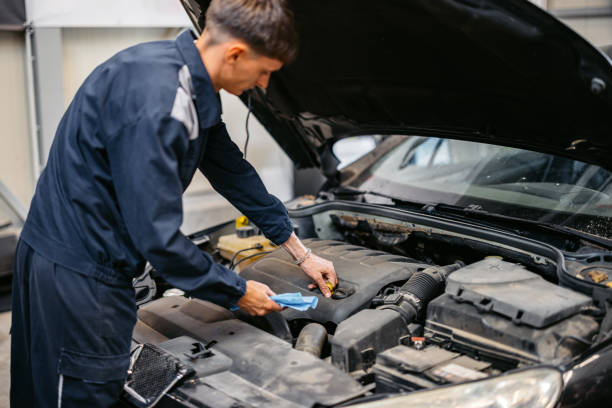
Fleet shops — trucking companies, bus lines, delivery giants, city garages — run on preventive maintenance. The work is scheduled inspections, services at set intervals, and the steady detective work of catching a failing water pump before it strands a load. You learn a specific roster of vehicles deeply, work a predictable shift, and go home on time most days. For mechanics who value steadiness over variety, and who like watching their own maintenance program prove itself over years, this is the bay. It is also the natural counterpart to the drivers on the other side of the work order — the same companies hiring through the routes in our guide to truck driver jobs and CDL training employ the fleets’ mechanics, too.
The dealership bay: one brand, deep systems, factory training
Dealership and distributor shops trade breadth for depth. You work on one manufacturer’s engines and aftertreatment systems until you know their failure patterns by sound, and the manufacturer trains and certifies you on its own technology — training that follows you if you move. The work skews toward diagnostics and warranty repairs on newer equipment, which means the laptop gets as much use as the wrench. Mechanics who enjoy being the person everyone calls about one particular engine family tend to thrive here, and the brand-specific credentials stack into a résumé that independent shops and fleets both read clearly.
The field truck and the equipment yard: the bay that comes to the machine
Field service inverts the job: instead of machines coming to the shop, you go to the machines — construction sites, farms, quarries, and the occasional highway shoulder. The equipment is heavy (excavators, loaders, agricultural machinery), the problems are unscheduled, and the day is built around triage: what gets this machine earning again fastest? It is the least predictable bay and, for mechanics who bore easily, the most fun. It also demands the broadest judgment, because the service truck carries a limited inventory and the next part is a phone call and a wait away.
Every bay now runs on two toolboxes: steel and software
Whichever bay you choose, the modern diesel trade is half electronics. Current engines manage themselves through sensors, control modules, and emissions aftertreatment systems that log faults and sometimes limit power until serviced. Employers screen for mechanics who can run diagnostic software, read a wiring diagram, and reason from a fault code to a root cause — the same drift toward systems thinking found across the trades, from the processes in our careers in welding guide to the diagnostics in starting a career in electrical work. Hands still matter — nobody torques a head bolt with software — but the ceiling on a diesel career is increasingly set by the second toolbox.
Becoming a diesel mechanic: the training every bay respects
The entry routes converge even though the bays diverge. A high school diploma or equivalent opens the door; from there, most mechanics build skill through a diesel technology program at a community college or trade school — mixing classroom systems theory with shop time on real engines — or through an apprenticeship or employer trainee role found via portals like Apprenticeship.gov’s career seeker pages. On top of training sits the trade’s common credential language: ASE certification, the testing program employers across all three bays recognize when they sort applicants. CareerOneStop, the Labor Department’s career portal, maps the occupation’s typical preparation and the credentials attached to it. The sequence matters less than the combination: structured training, documented shop hours, and certification earned early enough to compound.
Your own tools: the quiet second tuition
Nobody puts it in the brochure, but most mechanics buy their own hand tools, and the collection is a second education paid in installments. It starts with the student set a program requires, grows wrench by wrench through the apprentice years, and matures into the stocked box that experienced mechanics wheel from job to job like a credential of its own. Employers often supply the large and specialized equipment — lifts, diagnostic rigs, manufacturer-specific tooling — while the daily steel in your hands is yours. Budget for this from the first paycheck rather than the fifth: mechanics who buy deliberately, a quality piece at a time, end up with a box that makes them faster; mechanics who finance a mountain of tools in month one end up with a payment that makes them desperate. The bays differ here too — fleet and dealership shops tend to standardize more of the specialty tooling, field work rewards the most complete personal kit — and asking about tool expectations belongs on the same interview list as the ventilation question below.
The air in the bay is part of the job description
Diesel work has a hazard the other bays share equally: the exhaust itself. The Occupational Safety and Health Administration publishes dedicated guidance on diesel exhaust and diesel particulate matter, the fine particles produced by these engines, and treats controlling exposure — ventilation, maintenance practices, limiting idling in enclosed spaces — as core shop safety rather than fine print. Good employers ventilate their bays and say so on the shop tour; good mechanics ask about it in the interview, along with the hoists, the tire cages, and the lockout habits. A forty-year career in this trade is built as much on those systems as on diagnostic talent, and the time to learn which shops take them seriously is before you sign.