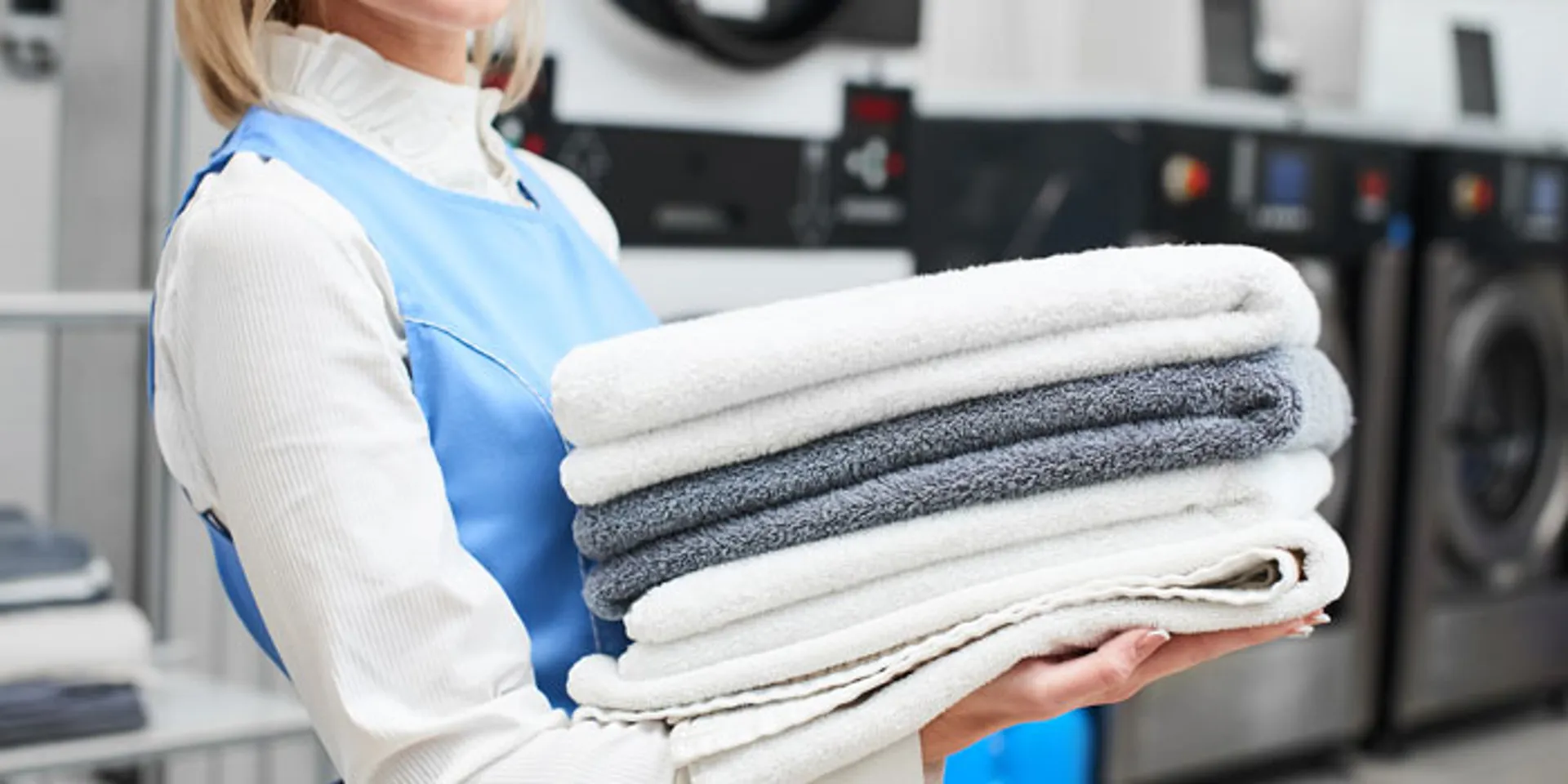
Every hotel runs on a room guests never see. Working in hotel laundry service means spending your shift inside that room, where the math is brutal and simple: a 300-room property can push thousands of sheets, towels, and pillowcases through the wash on a single checkout day, and every one of them has to come back clean, folded, and stacked before the next guest checks in. If you have wondered what the job actually looks like from the inside, forget the brochure version. Here is one shift, hour by hour.
Hour one: the sort decides your whole day
The shift starts at the sorting tables, and experienced laundry attendants will tell you this is where the day is won or lost. Housekeepers strip rooms and send linen down in bags or chutes; your first job is separating it by fabric, color, and soil level. Towels go one way, sheets another, and anything stained gets pulled for pre-treatment before it ever touches a machine. Sort wrong and you pay for it later — a load of whites ruined by one dark item, or lightly soiled linen wasting a heavy-duty cycle. This is also where you learn the job’s first real skill: pace with judgment. The machines are only as fast as the sorting feeding them.
The middle hours: wash, dry, fold, repeat — but never mindlessly
Hotel laundry runs on industrial equipment that behaves nothing like the machines at home. Washers are programmed by formula — water temperature, chemistry, and cycle length matched to what is inside — and attendants learn which program belongs to which load the way line cooks learn a menu. Then comes the part outsiders underestimate: the finishing work. Sheets and pillowcases often pass through a flatwork ironer that presses and folds in one motion, towels go through folding machines or get folded by hand to a property standard, and everything gets counted. Hotels track linen the way retailers track inventory, because par levels — how many sets exist per room — determine whether housekeeping can turn rooms on a sold-out night. A shortage at 3 p.m. is a crisis; a surplus means someone over-washed and shortened the linen’s life.
The physical reality, stated plainly
This is standing work in a warm, humid room, with lifting that adds up: wet linen is far heavier than dry linen, and a full load can test anyone’s back. Heat from dryers and ironers is constant, the noise floor is real, and the pace spikes hard on checkout days, convention turnovers, and wedding weekends. The Occupational Safety and Health Administration’s guidance for laundry operations covers the hazards employers are expected to manage — heat stress, ergonomic strain, chemical handling, and machine guarding — and it is worth a read before you interview, because a well-run laundry room looks noticeably different from a neglected one. Properties that rotate tasks, maintain their equipment, and staff the room properly are the ones worth working for. The work will remind some readers of the rhythm in warehouse jobs: physical, team-paced, and measured in units moved per hour.
What supervisors actually promote for
Nobody gets promoted in a laundry room for folding the prettiest towel. Supervisors watch for three things. First, machine sense: the attendant who hears a washer struggling before it faults saves the property money and the team a nightmare. Second, stain knowledge: treating a stain correctly the first time — knowing what blood, ink, makeup, and food each require — is a genuine craft skill, and senior attendants guard their knowledge like tradespeople do. Third, reliability at the ugly hours: laundry starts early, runs weekends, and cannot call in sick as a department. Show up consistently for the 5 a.m. sort and you will be surprised how fast lead and supervisor roles open up, because hotels promote from this room more often than outsiders assume. From there, paths branch into housekeeping management, facilities, and even commercial laundry operations that service many properties at once.
The handoff: where the laundry room meets the rest of the hotel
The last part of the shift is the part guests indirectly judge. Finished linen gets counted into carts by category — fitted and flat sheets, duvet covers, bath towels, hand towels, washcloths, robes, bath mats — and staged for housekeeping, whose attendants grab par for their floors and will come straight back down if the counts are off. A good laundry attendant learns to think like the floor staff: carts packed in the order rooms get cleaned, stained or damaged pieces pulled and logged rather than buried in a stack, and a quick radio call when a big checkout wave is about to hit. That handoff is also where the hotel’s money quietly leaks or holds — linen retired too early wastes budget, linen kept too long shows up in guest reviews as gray, scratchy towels. The attendants who understand they are the quality gate for both housekeeping and the guest experience are, not coincidentally, the ones supervisors describe as irreplaceable.
How hiring works for hotel laundry jobs
Most properties hire attendants with no experience and train on the machines, so listings emphasize stamina, schedule flexibility, and attention to detail rather than credentials. You will find openings on hotel company career pages, general job boards, and the U.S. Department of Labor’s CareerOneStop job search, which aggregates listings by occupation and ZIP code. Staffing agencies also fill these roles, especially in resort markets with seasonal surges — agency work can be a fast way in, and good attendants get hired permanently. If you are comparing back-of-house options, our overview of caregiver jobs shows the opposite end of hotel-adjacent work: people-facing instead of machine-facing, but with the same premium on showing up. In the interview, ask three questions that reveal everything: How many attendants staff a checkout day? What is the par level, and who counts it? And what happened to the last person in this role? The answers tell you whether you are joining a system or a scramble.