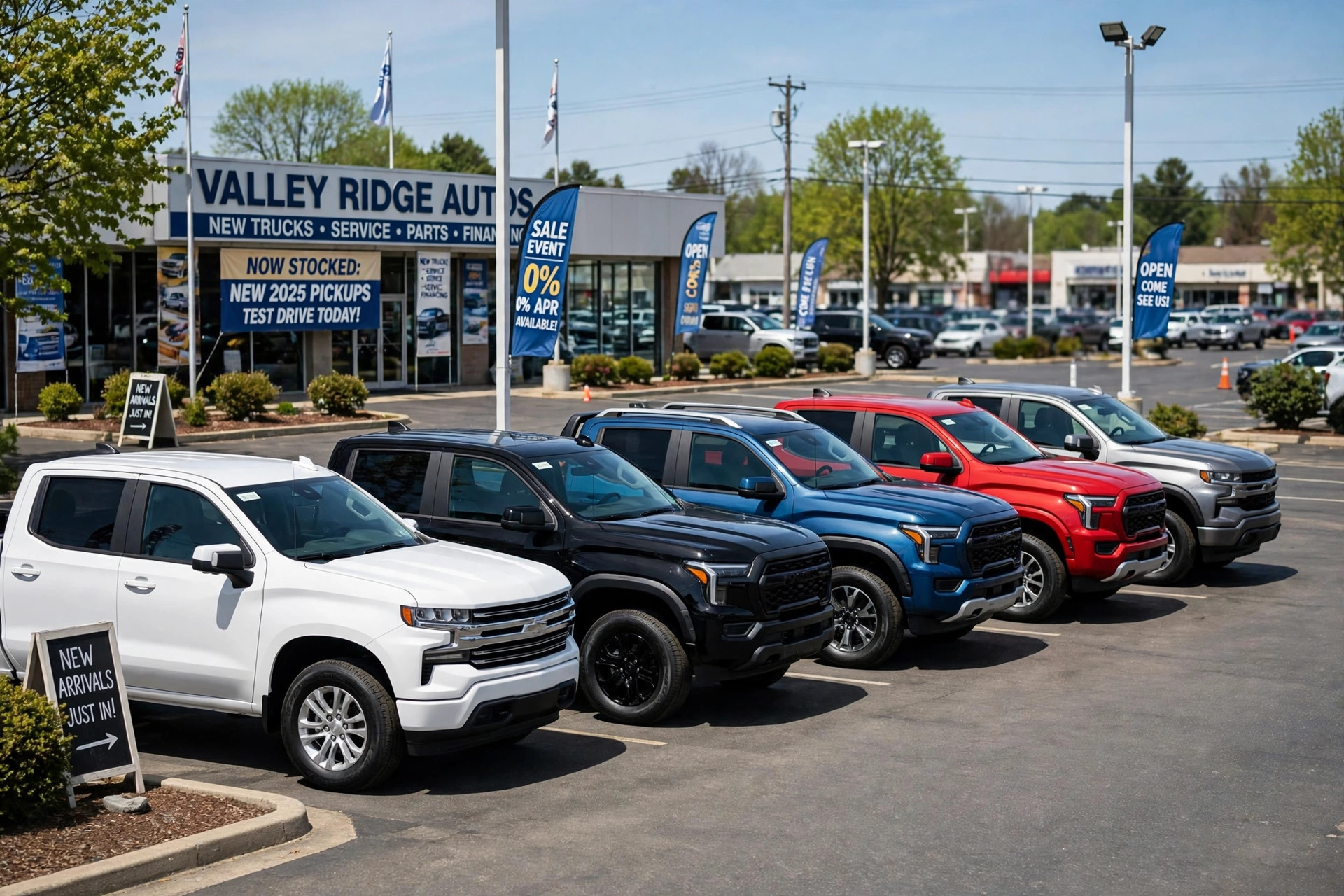
Every year, some trucks do not sell before the next model year arrives. They sit on dealer lots — brand new, never titled, fully warrantied — while newer trucks roll in beside them. Shoppers see them as instant bargains. Sometimes they are. Sometimes the discount is real but the truck is wrong, and the deal costs more than it saves.
Leftover trucks reward buyers who run the numbers instead of chasing the sticker. Here is the math that matters.
Why trucks go unsold in the first place
Trucks go unsold for ordinary reasons, not mysterious ones. A dealer may have ordered too many of one configuration. A color, cab style, or option package may be unpopular in that market. A model-year changeover may have arrived while stock was still healthy. Economic shifts can slow big purchases across the board, leaving more inventory than expected.
None of that says anything bad about the truck itself. A leftover is usually the same machine as the one that sold quickly, in a combination fewer buyers wanted. The question is never “why is it still here” in the abstract — it is whether the specific combination fits you, and whether the price reflects the fact that it is last year’s model.
Ask the dealer directly how long the truck has been on the lot and why it is still there. A straight answer — over-ordered, unpopular color, late arrival — is useful information. Evasion is information too.
The discount is real, but it is not automatic
Leftover status creates leverage, not a guaranteed price. Dealers want to clear last-year stock because it takes up space and financing capacity, and manufacturers sometimes support clearance with incentives. But the size of any discount depends on the truck, the market, and how many identical leftovers are competing with each other.
Do not assume the advertised price is the floor. Compare the leftover against three things: the same truck in the current model year, a comparable certified pre-owned truck, and the same leftover at other dealers. That triangle tells you whether the discount is meaningful or cosmetic. A small reduction on a truck you would not otherwise choose is not a deal — it is a discount on a compromise.
Also watch what the discount is made of. A lower price is straightforward. A discount bundled with add-ons you did not ask for — protection packages, accessories, dealer-installed extras — may not be worth what it appears. Price the truck, not the bundle.
The warranty clock and lot time
Two quiet costs hide in every leftover. The first is the warranty clock: on a brand-new truck, warranty coverage typically starts when the truck is first sold and titled, not when it was built — but confirm this for the specific truck, because terms vary and any dealer demo or service use changes the picture. If the truck served as a demo or loaner, its warranty and condition story is different from a truck that simply sat.
The second is lot time itself. A truck that sat outside for many months may need attention before delivery: tires can develop flat spots, batteries can weaken, fluids and seals age whether the truck is driven or not. None of this is a reason to walk away — it is a reason to insist on a proper pre-delivery inspection and to ask what has been done to the truck while it sat. A dealer that maintained its stock will have answers. Tires, battery health, and fluid condition are reasonable things to ask about on any long-sitting vehicle.
Configuration: the deal-breaker hiding in the discount
The most expensive leftover mistake is buying the wrong truck because it was cheap. A regular cab when you need a crew cab. Two-wheel drive when your winters or work demand four. A short bed when your gear needs a long one. A base work truck when you will spend hours a day in it and hate every one of them.
Leftover inventory is, by definition, what other buyers passed over. Sometimes they passed it over for a reason that does not apply to you — an unusual color you happen to love, a configuration that fits your work exactly. Sometimes they passed it over because the combination is genuinely hard to live with. Be honest about which case yours is. A discount does not fix a cab your family cannot fit in or a drivetrain that cannot do your job.
Sit in the exact truck. Drive the exact truck. Load what you actually carry, or measure it against the bed and cab. The leftover that fits your life is a bargain. The leftover that almost fits is an expensive lesson.
New, leftover, or certified pre-owned
A leftover competes with two alternatives, and the comparison decides whether it wins. Against a current model-year truck, the leftover should cost meaningfully less for what is usually a nearly identical machine — unless the new model year brought changes you actually care about, in which case the leftover’s discount is paying you to accept the older version. Know what changed between model years before you decide.
Against a certified pre-owned truck, the leftover offers a new-truck warranty and zero prior owners, but at a higher price. The certified truck offers a lower price and a manufacturer inspection with extended coverage. Run both totals: purchase price, expected resale value, financing, insurance, and maintenance over the years you will own it. The winner depends on how long you keep trucks and how much warranty matters to you.
Financing and fees: where leftover deals leak
Leftover pricing draws attention to the sticker and away from the rest of the deal, which is exactly where money leaks. Get the full out-the-door figure in writing before you commit: sale price, taxes, title and registration, documentation fees, and every add-on. Compare financing the same way — the monthly payment is not the cost of the loan, the total paid over the term is.
Be especially careful with long loan terms on a leftover. A truck bought at a discount but financed over many years can still leave you owing more than it is worth for a long stretch, and last-year models can depreciate faster once they are titled. A shorter term, a larger down payment, or both usually beat a low payment stretched thin.
The bottom line
An unsold truck is an opportunity, not a verdict. The opportunity is real when three things line up: the configuration fits your actual work and life, the discount is meaningful against current-year and certified alternatives, and the truck has been inspected after its time on the lot. When those three line up, buy it and enjoy the bargain. When any of them fails, the cheapest truck on the lot is the most expensive mistake you can make.