Toyota pickups earn their following the hard way: they hold their value, they last, and they do the job without drama. But the first decision — midsize Tacoma or full-size Tundra — shapes every cost that follows, from fuel to insurance to what the truck is worth years later. Get the size right and the rest of the math usually works. Get it wrong and you pay for capability you never use.
Here is how to run the numbers.
Tacoma or Tundra: buy the truck for the work you actually do
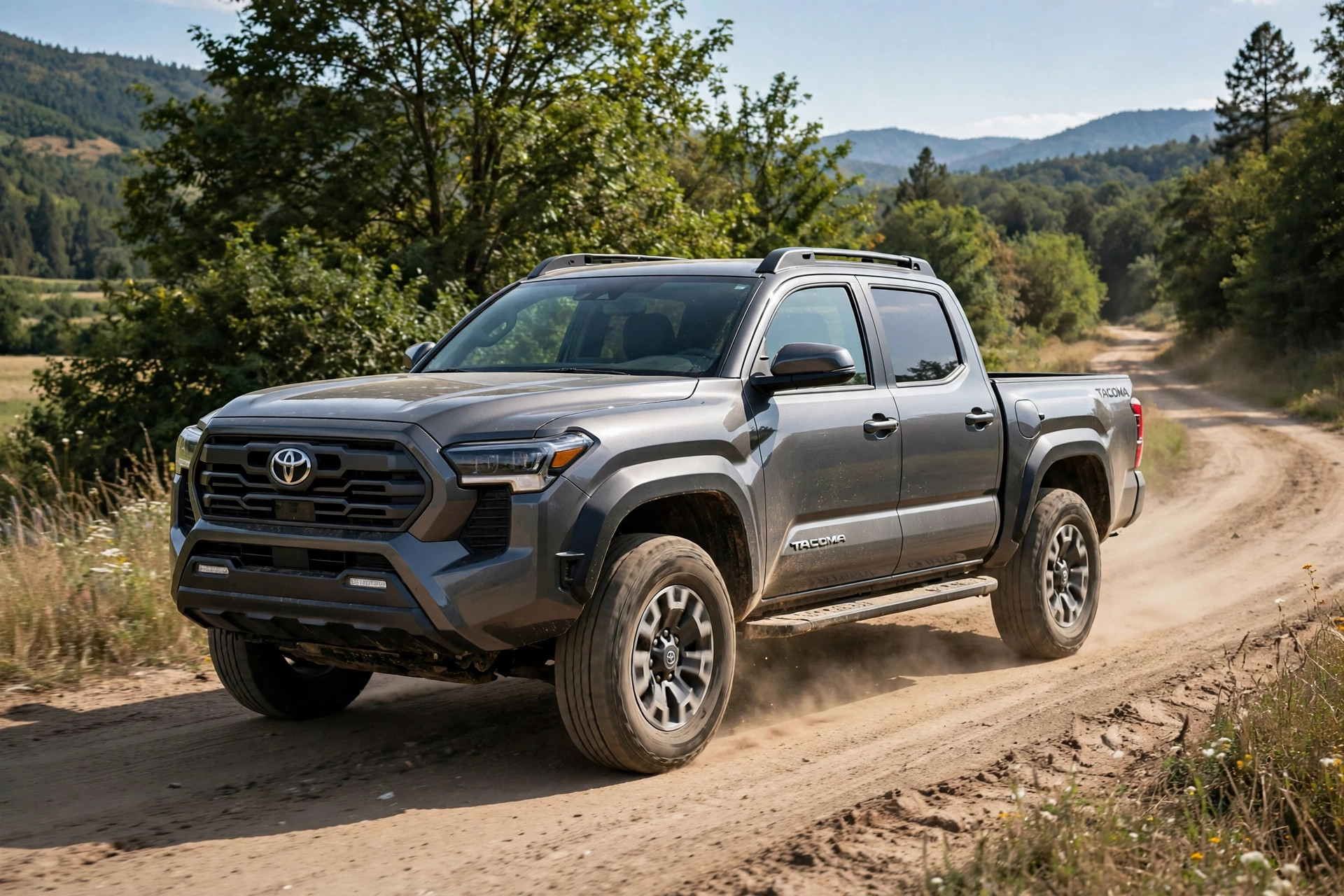
The Tacoma is the midsize answer: easier to park, easier to live with daily, and enough truck for most homeowners, weekend haulers, and light job sites. The Tundra is the full-size answer: more cabin space, more bed, more towing and payload for people who genuinely need it.
Be specific about your work. What do you tow, how often, and how heavy? What goes in the bed on a normal week? How much of your driving is commuting and errands versus hauling? A Tundra bought for a twice-a-year trailer trip is an expensive way to move air the other 363 days. A Tacoma bought to regularly tow near its limits is a truck working too hard. Match the truck to the typical week, not the extreme weekend, and rent or borrow for the rare exception.
Cab and bed configuration matter as much as the model. A crew cab carries family comfortably but shortens the bed; an extended cab preserves bed length at the cost of rear-seat room. Measure what you actually carry — lumber, kayaks, toolboxes, car seats — and choose the configuration that fits it, not the one that looks best in photos.
Fuel: the cost that separates the two
Fuel is where the Tacoma-Tundra gap shows up every week. The larger, heavier Tundra uses more fuel than the Tacoma in comparable driving, and over years of ownership that difference is one of the largest costs in the whole calculation. If your driving is mostly commuting and errands, the Tacoma’s fuel advantage is significant. If your work genuinely needs the Tundra, the fuel cost is the price of that capability — but go in with eyes open.
Some versions offer hybrid powertrains, which change the math most for drivers with city-heavy or stop-and-go patterns. As with any hybrid, run your own numbers: your annual miles, your city-highway split, and the fuel prices you actually pay. A hybrid premium only pays back if your driving pattern cooperates, and the truck’s workload matters too — a truck that tows heavy loads constantly will see different returns than one that commutes.
Insurance and maintenance: predictable, with truck-specific notes
Insurance for a pickup reflects its price, its repair costs, and how it is used. A work truck that carries tools and equipment may need different coverage than a family daily driver, so talk to your insurer about actual use before you buy, not after. Higher trims with more expensive parts and larger wheels cost more to insure, so get quotes for the exact trim you are considering and the one below it.
Maintenance on a Toyota pickup is straightforward: oil, filters, tires, and fluid services on schedule, with a reputation for durability that keeps unscheduled repairs less frequent than average. Two truck-specific items deserve attention. First, tires: pickups wear larger, pricier tires, and a full set is a major expense — ask about tire size and replacement cost when comparing trims. Second, if the truck tows or hauls regularly, follow the severe-service guidance for fluids and brakes, because work shortens service intervals.
Resale value: where Toyota pickups quietly win
Strong demand for used Toyota pickups means they hold their value unusually well, and that retained value is real money back when you sell or trade in. A truck that costs more up front but holds its value can easily be cheaper overall than a cheaper truck that depreciates fast.
Three things protect resale value most: complete service records, a clean accident history, and a popular configuration. Keep every receipt, fix damage properly, and think twice before ordering an unusual color or a rare option package that narrows your future buyer pool. Four-wheel drive is popular in the used market in many regions, but buy it because you need it — resale alone is a weak reason to pay for capability you never use.
If you are buying used, the same logic works in reverse: a well-documented truck with full records is worth paying more for than a cheaper one with gaps. And on older used trucks, have the frame inspected for rust and damage by someone who knows trucks — frame condition is the one thing that can turn a bargain into a problem.
Trims: work trucks and luxury trucks are different purchases
Toyota pickup lineups run from honest work trucks to near-luxury models with leather, premium audio, and advanced assistance packages. The value question is what the truck is for. A work truck earns its keep with durability and utility; a luxury trim earns its keep only if you genuinely enjoy its features daily.
Before stepping up a trim, ask which features you will touch every day. Heated seats, a power tailgate, and blind-spot monitoring earn their keep constantly. A panoramic roof or a premium badge may delight you or may be forgotten within a month. Sit in both trims, use the controls, and decide with your hands.
One feature worth prioritizing at any trim is driver assistance: automatic emergency braking, adaptive cruise control, and blind-spot monitoring are safety equipment that also makes long highway drives far less tiring. Confirm exactly what is included on the specific truck, since packages change by model year.
New, used, or certified: pick by total cost
A new pickup gives you the full warranty, the latest features, and your exact configuration at the highest price and fastest early depreciation. A certified pre-owned truck — inspected by the manufacturer with extended warranty coverage — is often the best value, especially at two to four years old, when the steepest depreciation is behind it but warranty life and modern safety features remain.
An ordinary used truck is the cheapest to buy and the riskiest to own. Without certification, a pre-purchase inspection by an independent mechanic is essential, and service history matters even more — particularly for trucks that towed or hauled, where wear hides in drivetrain and suspension. Whatever route you choose, compare total cost: purchase price minus expected resale value, plus fuel, insurance, and maintenance over your ownership period.
The bottom line
The right Toyota pickup fits the work you actually do, costs an amount you can live with for years, and holds its value when you move on. Size it by the typical week, price the fuel and tires honestly, and buy the configuration future buyers will want. Do that, and the truck earns its reputation in your driveway, not just in the brochure.