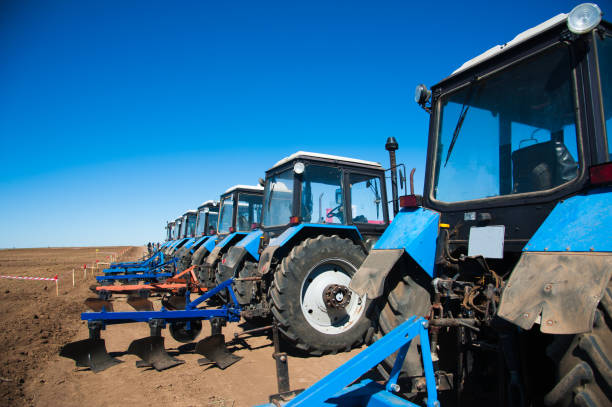
A repossessed tractor is not a mystery machine; it is the end of a loan that stopped working. Somewhere behind it there was a bad season, a breakdown at the wrong month, or payments that outgrew the harvest — and when the lender closed the file, the tractor moved into a sales channel that prices equipment to leave, not to linger. Buyers who understand that pipeline shop differently from buyers who just browse listings: they know why the machine is cheap, where in the pipeline the best value sits, and what the discount is quietly charging them for. Follow the loan backward, and the opportunities stop looking random.
Where a defaulted loan sends a repossessed tractor
The first stop is usually the lender’s own sale — a bank, a credit union, or an equipment finance company disposing of recovered machinery through scheduled auctions or sealed bids. The second stop is the dealer network: dealers take repossessed units as part of their lender relationships, sometimes cleaning and retailing them, sometimes passing them through wholesale. Retirement and estate sales form the third channel, where a whole line of equipment sells in a day and repossessed pieces mix with owned ones. Government surplus is the fourth and strangest lane: agencies sell used machinery to the public, catalogued through portals like GSA Auctions, with the broader landscape of public sales mapped at USA.gov’s auctions page. The same tractor can surface in more than one of these channels across a season, and its price tends to soften each time it fails to sell — patience is a pricing strategy. Timing cuts the same way: recovered equipment clusters after harvest failures and at the end of lenders’ fiscal quarters, when files get closed and lots get cleared, while spring — when every farmer suddenly needs another tractor — firms prices right back up. The buyer with cash or credit arranged in the quiet months shops a buyer’s market; the buyer who waits until his own machine breaks in planting season shops the same iron at seller’s prices, in a hurry, against everyone whose machine also broke. Shopping early is not a personality trait. It is most of the discount.
Read the machine the way the lender’s appraiser did
Before a loan ever went bad, an appraiser valued that tractor with cold eyes, and you should borrow them. Start with the hour meter and its plausibility — hours against pedal wear, seat condition, and tire age tell a truer story than the dial alone. Work the hydraulics under load: raise and hold a heavy implement and watch for drift that betrays tired seals. Engage the PTO and listen; clutch and driveline complaints announce themselves under strain, not at idle. Check for the leaks that matter — hydraulic and rear-axle weeping point at shop bills, while dust-darkened grime around fittings is farm normal. Tires are the sleeper cost: a set of rears can erase the auction discount in one invoice, so price them before you bid, not after. The auction logic here rhymes with the seized-car world in our guide to impound vehicles — the discount is real, and so is everything the discount is compensating for.
Financing the second life of the machine
A bargain tractor still has to be paid for, and farm credit has its own front door. The Farm Service Agency’s farm loan programs exist for producers who cannot get credit on standard commercial terms, including beginning farmers, with both direct and guaranteed loan routes for farm ownership and operating needs — equipment included. Even buyers who end up with a commercial lender benefit from reading the FSA material first, because it defines what a workable farm loan looks like and sharpens every question you ask a banker. Two warnings belong here. First, auction purchases often demand fast settlement, so arrange the money before the sale, not in the parking lot after it. Second, resist stretching the equipment budget because the sticker was kind: the same discipline that governs small purchases in our used car guide — total cost, not the headline number — applies to a tractor with interest attached.
The costs standing behind the gavel
The hammer price is the beginning of the invoice, not the end. Transport comes first: a tractor two states away needs a trailer, permits in some cases, and a day of someone’s life, and lowboy hauling for a heavy machine is a real line item. Then comes the as-is reality — auction terms generally sell machines exactly as they sit, which is why the inspection section above is not decoration: a hydraulic pump or a clutch discovered in your own barn costs retail money. Add fluids, filters, and the deferred maintenance a struggling operation predictably skipped, and the honest total often lands a fifth above the bid. None of this kills the opportunity; it just moves it. The buyers who make repossessed tractors pay are the ones who set their maximum bid from the total — machine, transport, first repairs — and let someone else win the units that drift past it. If your operation also runs trucks, the same total-cost habit powers our guide to finding the best deals on Ford F-150 and Ram trucks. Follow the loan, read the machine like an appraiser, finance it like a farmer, and count every cost behind the gavel — that is where the opportunity actually lives.