
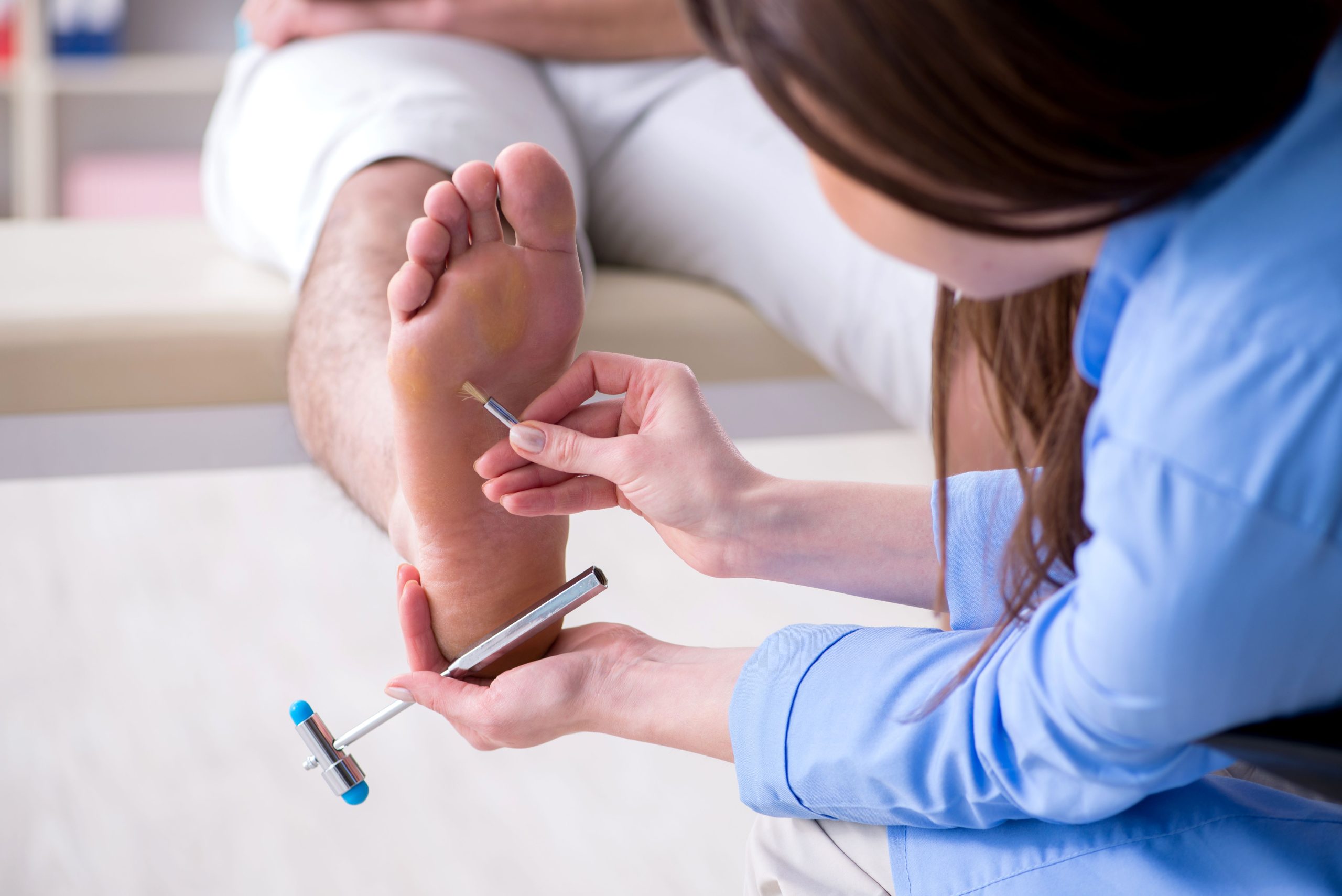
Everyone who joins a neuropathy study expects the treatment to be the point. Researchers will tell you the measuring comes first, and it is not a formality. Nerve damage is slow, uneven, and notoriously hard for patients to describe consistently — burning to one person is tingling to another, and a good week can erase a bad month in memory. So neuropathy clinical trials are built as measurement exercises with a treatment in the middle: careful testing before, during, and after, designed to catch changes far smaller than “I think I feel better.”
First, the sorting: which neuropathy is this?
“Neuropathy” in a trial title hides a sorting step that decides almost everything. Peripheral neuropathy has many causes — diabetes is the most common in research recruitment, but chemotherapy, autoimmune disease, vitamin deficiencies, and cases with no identified cause all appear, and they are usually studied separately because a treatment aimed at one mechanism may do nothing for another. The National Institute of Diabetes and Digestive and Kidney Diseases’ diabetic neuropathy resource explains how high blood glucose injures nerves over time, which is why diabetes trials often track blood sugar management alongside the nerve outcomes. MedlinePlus’s peripheral nerve disorders hub maps the wider family. Screening for a study therefore includes detective work on cause — labs, history, sometimes prior records — and being sorted out of one study usually means your neuropathy belongs to a different study’s question.
The sorting goes one level deeper, and it explains a common puzzle: why symptoms and test results sometimes disagree. Nerves come in sizes. Large fibers carry vibration and position sense and are what conduction studies measure well; small fibers carry pain and temperature and can be badly damaged while conduction tests still look nearly normal. A person can therefore hurt intensely and be told their big test was “fine” — not dismissed, just measured with the wrong ruler. Trials that focus on pain often add the small-fiber tools, such as skin biopsy fiber counts, precisely to see the half of the disease the standard test misses. When you read a study’s eligibility rules and see a biopsy requirement, that is usually why: the researchers are enrolling the fiber type their treatment is meant to reach.
The baseline battery: what they measure and why
Expect some combination of nerve conduction studies, which time how fast electrical signals travel; quantitative sensory testing, which measures your ability to feel vibration, temperature, and pinprick against thresholds; questionnaires that score pain, sleep interference, and daily function; and sometimes a small skin biopsy that counts nerve fibers. Each tool catches a different slice of the problem, and together they form the baseline every later result is judged against. This is also where the dedicated literature on diabetic nerve pain clinical trials becomes useful reading, because pain-focused studies lean hardest on the diaries and scales, while disease-focused studies lean on conduction and fiber counts. Participants who understand which slice their study is measuring report the right things at the right visits.
What treatments are being tested — and what “success” means
The treatment lanes split along the same line. One lane targets symptoms: new analgesic approaches, topical agents like those surveyed in our guide to top creams for nerve pain, and compounds meant to calm overactive pain signaling. The other lane targets the underlying process — protecting fibers, improving blood flow to nerves, or tightening control of a cause such as blood glucose, a direction that connects to the monitoring technology covered in our look at the Medicare glucose monitor ring. Success in the symptom lane is a meaningful drop in pain scores over weeks; success in the process lane may be nothing more dramatic than decline slowed or halted over a year or more, detectable only because the baseline battery exists. Neither is a cure claim, and honest studies say so.
The human variables: sleep, mood, and why the diaries ask about both
New participants are sometimes puzzled when a nerve study’s diary asks about sleep quality and mood alongside pain. It is not mission creep. Pain disrupts sleep, poor sleep lowers pain tolerance, and low mood amplifies both — a loop every neuropathy patient recognizes from the inside. If a trial measured pain alone while a treatment quietly improved sleep, it would misread its own result; if pain worsened during a month of insomnia for unrelated reasons, it might condemn a treatment that was working. So modern protocols measure the loop, not just the nerve, and statistical plans account for it. This also gives participants a more honest picture of benefit: a study drug that leaves the conduction numbers untouched but gives back unbroken sleep has done something real, and the diaries are how that reality gets documented instead of dismissed as anecdote. When you read a trial’s results later, check which of these human variables moved. The full answer to “did it help?” is usually spread across all of them.
Deciding whether a study fits
Search ClinicalTrials.gov by your specific cause of neuropathy, not just the word itself, and read the eligibility section as the sorting step it is. Then ask the study team three questions: which measurements are primary, how long the follow-up runs, and what standard care continues during the trial — most studies layer the experimental treatment on top of your existing management rather than replacing it. Neuropathy rewards patience in research as in life: nerves change slowly, and the trials built to help them are honest about that pace. What they offer in return is the most thorough nerve evaluation most participants have ever had, and a place in the slow, real work of turning measurement into treatment.






