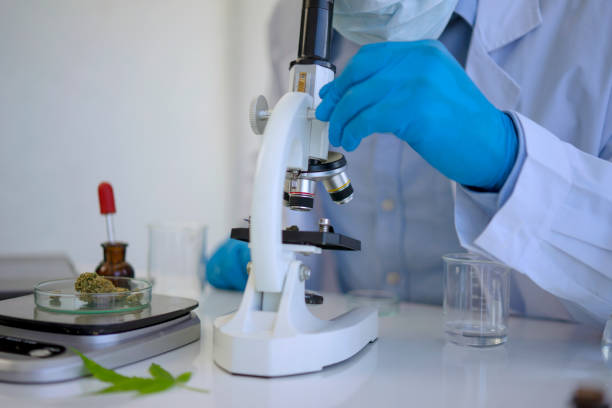
Here is the paradox at the center of cannabis science: dispensaries in much of the country sell marijuana to anyone with an ID, yet doctors still cannot answer basic questions about it with confidence. What dose helps chemotherapy nausea? Does it ease chronic pain, or mostly help people sleep through it? Which patients should avoid it entirely? Marijuana clinical trials exist to close that gap, and they face obstacles no ordinary drug study encounters — starting with the fact that for decades the plant sat in the federal government’s most restricted drug category, which meant every researcher needed special licenses, security, and patience just to begin.
Why this research is harder than it looks
Three problems make cannabis uniquely awkward to study. The first is standardization. A prescription pill contains the same molecule in the same amount, every time; a cannabis flower varies by strain, harvest, and grower, and even two extracts with the same THC percentage can behave differently because of the dozens of other compounds riding along. Serious trials solve this with tightly controlled, pharmaceutical-grade products whose contents are measured to the milligram. The second problem is blinding. In a normal trial, neither patient nor doctor knows who got the real drug — but people generally notice when they are high, which quietly breaks the blind and can inflate reported benefits. Researchers counter with low-dose “active placebos” and objective measurements wherever possible. The third problem is history: long federal restrictions kept supply limited and discouraged universities from building expertise, so the evidence base is still catching up with the marketplace.
The conditions researchers keep coming back to
Cannabis trials cluster where patient demand and early signals overlap:
- Epilepsy produced the field’s landmark proof: a purified CBD medicine won FDA approval for rare seizure disorders, showing a cannabis compound can clear the full regulatory bar. Our explainer on epilepsy clinical trials covers how seizure studies are run.
- Chemotherapy side effects, especially nausea and appetite loss, were among the earliest accepted medical uses and remain active research areas.
- Chronic pain draws the largest number of studies and volunteers, with results that are promising but mixed — pain scores often improve modestly while function improves less.
- Sleep disorders are a fast-growing target, as researchers test whether cannabinoids can help without the dependence risks of sedatives; see also our look at insomnia clinical trials.
- PTSD, spasticity in multiple sclerosis, and cannabis use disorder itself — yes, some trials study how to help people cut down, which tells you how seriously the field now takes risks alongside benefits.
THC, CBD, and everything else in the plant
Most trials isolate one or two compounds rather than studying “marijuana” as a whole. THC is the psychoactive component — responsible for the high, much of the nausea and appetite effect, and most of the impairment risk. CBD does not intoxicate and has drawn research interest for seizures, anxiety, and inflammation. Beyond those two sit more than a hundred minor cannabinoids — CBG, CBN, THCV and others — each now getting early-stage attention, plus terpenes, the aromatic compounds behind the plant’s smell. When a listing on a trial registry names a specific formulation and dose, that precision is deliberate: researchers are testing a defined medicine, not a dispensary product.
What the evidence actually shows so far
After decades of restricted research, the honest summary is “less than the marketing, more than the skeptics assume.” The strongest proof sits in epilepsy, where a prescription CBD medicine cleared full FDA approval for rare childhood seizure disorders. Synthetic THC medicines have been approved since the 1980s for chemotherapy nausea, so that use rests on solid ground too. For chronic pain — the most common reason patients give for using cannabis — a major 2017 review by the National Academies found substantial evidence of modest benefit, while cautioning that effect sizes are small and study quality varies. On the risk side, the same review linked regular use to dependence in a meaningful minority of users and to worse outcomes for people predisposed to psychosis. Trials exist precisely to sharpen these blurry edges, condition by condition and dose by dose.
What volunteering actually involves
Expect screening to be unusually thorough. Many cannabis studies require urine drug tests at intake and throughout, ask about your history with the substance in detail, and exclude people with certain psychiatric histories, pregnancy, or safety-sensitive treatment conflicts. During the study you may be required to abstain from all cannabis outside the protocol — including legal purchases — and some trials restrict driving after dosing days. Visits often include cognitive and reaction-time testing, since measuring impairment is part of the point. Compensation follows the usual research pattern: study product and study-related testing are provided at no cost, with payment for time and travel varying by study. One caution that applies here more than in most research: if your employer drug-tests, participation in a THC study can put your job at risk, and consent forms say so plainly.
How to find legitimate marijuana clinical trials
Search ClinicalTrials.gov for “cannabis” or “cannabinoid” plus your condition, and filter for recruiting studies near you — university medical centers run most of them. The same participation playbook described in our guide to arthritis clinical trials — screening, informed consent, scheduled monitoring, the right to withdraw — applies here too, with the drug-testing extras noted above. Be wary of anyone outside a university or registry listing who offers to pay you to “test products”: that is marketing dressed as research, and it is not how real marijuana clinical trials recruit.