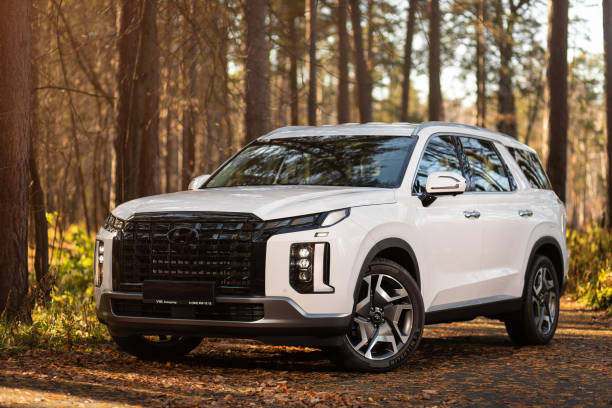
Three-row SUVs are where family car shopping gets serious — and expensive. The Hyundai Palisade has spent the last several years as the segment’s value argument: a big, quiet, genuinely comfortable family hauler with near-luxury manners at mainstream prices. It is not the newest nameplate anymore, which is precisely why it deserves a close look. Mature models get the best incentives, the most complete safety data, and a certified pre-owned pipeline. Here is what the Palisade offers, what the independent testing actually says, and how to buy one well.
Room for the whole crew — and their stuff
The Palisade seats seven or eight, depending on whether the second row is a bench or captain’s chairs, and the third row is usable by actual humans rather than only small children in a pinch. Legroom runs generous across all three rows, the cabin is notably quiet at highway speed, and the materials — especially in the Limited and Calligraphy trims, with their quilted leather, ambient lighting, and heated and ventilated seats — feel a class above the price. Families cross-shopping smaller two-row crossovers should sit in the third row of both before deciding; our look at the Honda CR-V’s features and deals shows what you gain in efficiency and give up in space at the smaller end of the family market.
Safety: top marks, with one honest caveat
The Insurance Institute for Highway Safety named the 2025 Palisade a Top Safety Pick. Its detailed scores explain why: Good — the top rating — in the small overlap front test, the updated side test, headlights, and standard front crash prevention for pedestrians. Hyundai’s SmartSense suite backs that up with forward collision-avoidance assist, blind-spot monitoring, lane-keeping assist, smart cruise control, rear cross-traffic alert, and available Highway Driving Assist.
Now the caveat, because families deserve the whole picture: in the IIHS updated moderate overlap front test, the 2025 Palisade scored Poor overall, driven by injury measures for the rear passenger — a pattern now showing up across several three-row SUVs in this newer, stricter test, as our batch testing notes on its rivals confirm. The driver measures were strong; the concern is specifically second-row occupant protection in that one crash mode. Hyundai’s own Palisade page lists the standard safety equipment trim by trim, and if you routinely carry kids in the second row, this is a fair question to raise with the dealer and to weigh against the model’s otherwise excellent scores.
Power, towing, and what it drinks
Every Palisade in this generation runs a 3.8-liter V6 making 291 horsepower, paired with an eight-speed automatic and a choice of front- or all-wheel drive. It is a relaxed, refined combination rather than a sporty one, and it tows up to 5,000 pounds when properly equipped — enough for a small camper or boat, which is why you’ll also find it mentioned in our RV shopping coverage. Fuel economy is the expected tax for size and a V6: the EPA rates the 2025 model at 22 mpg combined for front-wheel drive and 21 combined for all-wheel drive, per FuelEconomy.gov. If the annual fuel bill gives you pause, Hyundai’s smaller Santa Fe is the in-family alternative — our guide to the Hyundai Santa Fe compares what you trade away in seats and space.
Technology that survives family life
The tech list reads like it was specified by parents: a large touchscreen with Apple CarPlay and Android Auto, USB ports in all three rows so nobody’s tablet dies on hour two, available wireless charging, a digital instrument cluster, and a head-up display on upper trims. Multiple charge points and durable touch surfaces sound mundane until you have lived with a car that lacks them. This is the Palisade’s quiet strength — not one headline gadget, but a cabin that handles daily family chaos gracefully.
Finding the deal: incentives, timing, and the used shortcut
Hyundai funds the Palisade’s deals in cycles: cash rebates, low-APR financing, loyalty bonuses for current Hyundai owners, and lease specials all rotate by region and month. The richest offers cluster around holiday sales events and the model-year changeover, when dealers discount the outgoing year. Get written quotes from at least three dealers — high-volume stores a town over often beat the neighborhood lot — and negotiate the vehicle price before discussing financing or trade-in, so each number stays honest.
Two costs hide outside the quote, so price them before you sign: insurance on a top-trim three-row SUV runs noticeably more than on the base trim, and a few insurers rate the Calligraphy’s repair costs like the luxury vehicle it imitates. Get an insurance quote on the exact trim and VIN before the paperwork, and check whether your state taxes the vehicle on its full value. Neither cost is a reason to walk away — both are reasons to walk in with the true monthly number instead of the advertised one.
Leasing suits drivers who like a new vehicle every three years and stay within mileage limits; buying suits families who keep cars, and the Palisade rewards them with strong resale demand. The certified pre-owned route is the value sweet spot: Hyundai’s CPO program adds inspection and warranty coverage to a depreciated price. Our companion guide collects more tactics for finding a good deal on a Hyundai Palisade, including how to stack incentives without double-counting.
Shop the Palisade with the safety report in one hand and three dealer quotes in the other, and you get what families keep saying they bought: the most space, calm, and equipment their money could reasonably reach — with eyes open about the one test score worth knowing.