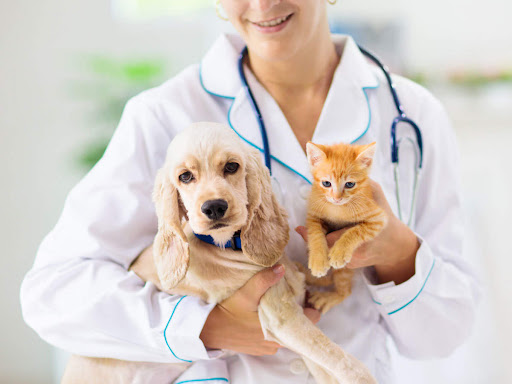
Pet insurance is sold with pictures of puppies and bought, usually, in a hurry. But strip away the marketing and it is a plain financial product — a bet on future vet bills — and the way to find a good deal on pet insurance is the way you would evaluate any financial product: run the numbers before someone runs them for you. That means understanding the two ways a pet owner can pay for an emergency, the three dials that set every premium, and the one variable almost nobody shops for, which is the age of the animal on the day you apply.
The two ways to pay for a vet emergency — and where pet insurance fits
Every pet owner self-insures by default. Money sits in a savings account, and when the dog swallows a sock or the cat develops kidney trouble, the account absorbs it. Formal insurance replaces that arrangement with premiums: smaller, predictable payments in exchange for the insurer taking the big, unpredictable ones. Neither is automatically smarter. Self-insuring works well for someone who can build the fund quickly and whose pet stays healthy while it grows. Insurance works better when a large bill in the next year would mean choosing between treatment and debt. The industry’s own trade group, the North American Pet Health Insurance Association, publishes a buying guide that lays out plan types plainly, and it makes a good neutral starting point before you look at any single company’s pitch. The honest question is not “is pet insurance worth it?” but “which risk would hurt my household more — the premium or the bill?”
The three dials that set your premium
Every quote you will ever receive is produced by three settings. The deductible is what you pay first — commonly structured as an annual amount, sometimes per incident — and raising it lowers the premium in a straight trade. The reimbursement rate is the share the insurer returns after the deductible, because pet insurance almost always works by reimbursement: you pay the clinic, file a claim, and get a percentage back. The annual limit is the ceiling on what the policy returns in a year, and unlimited plans exist at the expensive end. A cheap premium is simply a particular setting of the dials: high deductible, low reimbursement, low ceiling. To compare two policies honestly, set the dials the same on both and then compare prices — or, better, pass one large imaginary vet bill through both policies and see what each leaves in your pocket. The Cornell University College of Veterinary Medicine and the American Animal Hospital Association both publish pet-owner guidance that helps you judge what care typically involves, which is the ground truth the dials have to cover.
The age on the application matters more than the breed
Here is the variable the comparison sites underplay. Pet insurance excludes pre-existing conditions — what the animal already has, or has shown signs of, before the policy starts and its waiting periods run out. Every policy also has waiting periods after enrollment before coverage begins, longer for some orthopedic problems. Put those together and timing becomes strategy: a puppy or kitten enrolled young can carry nearly clean coverage for life, while the same policy bought for a nine-year-old dog arrives with a medical history already attached and excluded. This is worth remembering at adoption time, too — our article on pet adoption and second chances covers the joyful part; the paperwork part is that the first vet visit and the insurance decision belong in the same week, while the record is still short.
Accident-only versus accident-and-illness
The big price split in the market is between accident-only plans and comprehensive accident-and-illness plans. Accident-only coverage is cheaper because it is narrower: injuries, swallowed objects, broken bones — events, not diseases. Illness coverage is where the money and the value both live, because cancer, diabetes, and organ disease are the expenses that arrive slowly and cost the most. An accident-only policy can be a perfectly rational deal for a young, indoor animal whose realistic risks are physical. It is a poor deal dressed as a bargain for an aging purebred whose realistic risks are medical. Wellness add-ons, which reimburse routine care like vaccinations and checkups, are a third category: mostly pre-payment plans rather than insurance, worth it only if you would use every included service — and either way, keeping routine costs down with the strategies in our guide to affordable vet clinics for your pets beats financing a dental cleaning through a rider.
When the numbers say skip it
A good deal includes knowing when there isn’t one. If your pet is older, already carries diagnoses that would be excluded, and you can fund an emergency reserve equal to a major surgery, self-insuring may honestly win — the premiums buy coverage for a risk list that has already been shortened. If the reverse is true — young animal, thin savings, a breed with known expensive tendencies — insurance bought early is usually the cheapest version of itself you will ever be offered. Run the dials, respect the waiting periods, and decide with the bill in mind rather than the brochure. That is all a good deal on pet insurance has ever been.