Lexus SUVs have a simple appeal: quiet, comfortable, and backed by a long reliability reputation. The hard part is not deciding whether one is a good idea — it is choosing which fits your life, and how much budget should go to size and features you will actually use.
This guide covers the lineup, new versus certified pre-owned, and a checklist to take to the dealership.
The lineup, in plain language
Lexus sells more SUVs than cars these days, and the range stretches from a small city crossover to a full-size luxury flagship. Here is the short version:
- UX: The smallest Lexus SUV. Easy to park, easy on fuel for a luxury vehicle, and best for solo commuters or couples who rarely need a big back seat.
- NX: A compact SUV and one of the brand’s best sellers. Big enough for a small family, still manageable in a city, and available in gas and hybrid forms.
- RX: The midsize mainstay. This is the default choice for many buyers: roomy, quiet, comfortable, and offered with gas and hybrid powertrains.
- TX: The three-row family hauler. If you regularly carry six or seven people, or need a large cargo area behind the third row, this is where to look.
- GX: A rugged, body-on-frame SUV with real off-road ability and towing capability. It is heavier and thirstier than the car-based models, but it is the pick for buyers who actually leave the pavement.
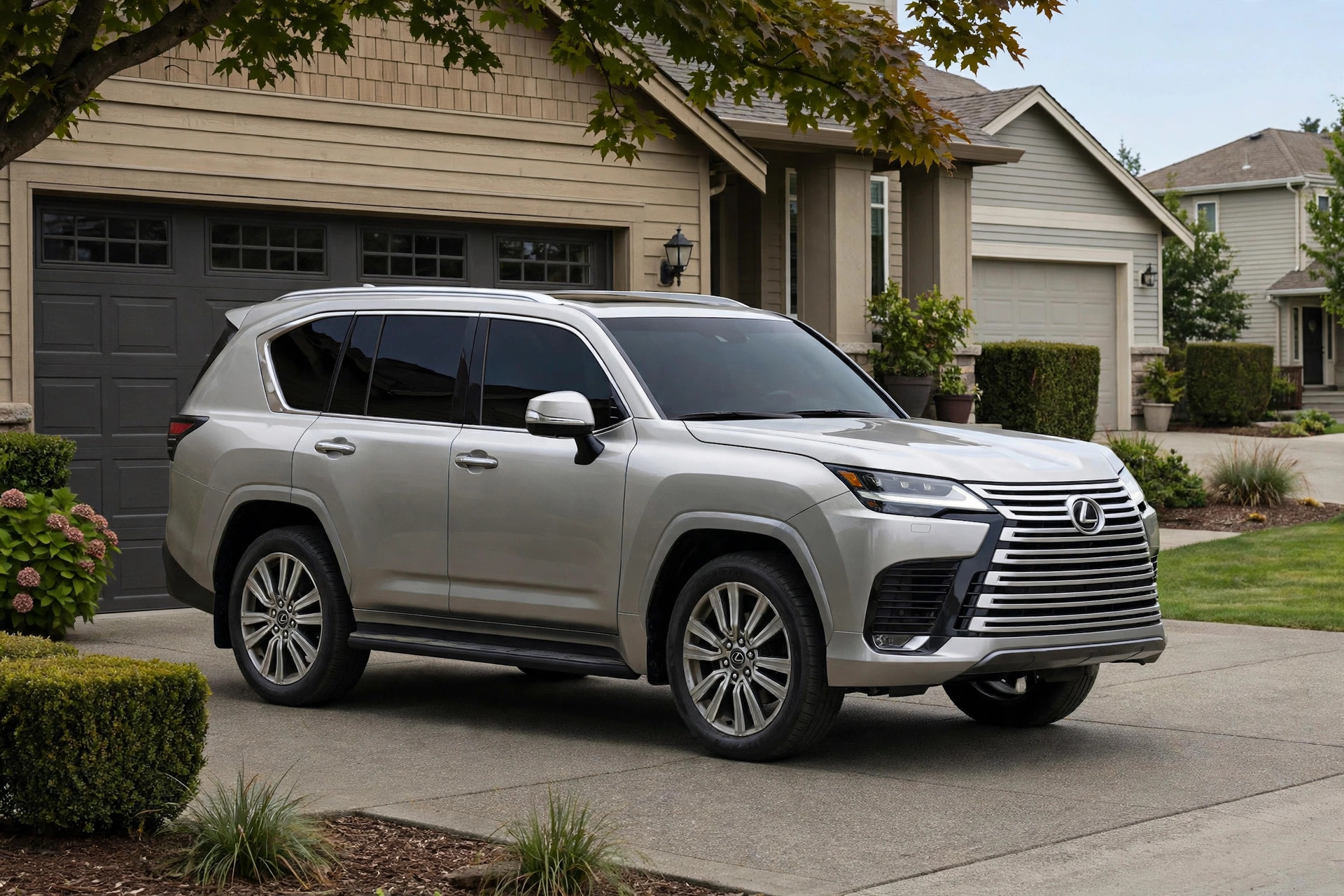
- LX: The flagship. The largest, most luxurious, and most expensive Lexus SUV, with serious towing and off-road hardware to match.
- RZ: The all-electric Lexus SUV. Quiet and smooth, with the usual electric-vehicle trade-offs: home charging is convenient, long road trips need planning.
You do not need to memorize every trim. Start with size, then narrow from there.
Start with size, not trim level
Most buyers go wrong by falling for a trim package before settling size: a loaded NX will never carry what a TX carries, and a base RX may be a better daily driver than a top-trim GX if you never tow.
Ask three questions: how many people ride with you in a regular week, not just on holidays? What is the largest thing you carry often — a stroller, a dog crate, sports gear, work equipment? Where do you park daily? A larger SUV is only a good deal if it fits your garage, commute, and life.
If the answer to all three is “small,” the UX or NX will probably make you happier than a bigger model, and will cost less to buy, fuel, and insure. If you need three rows more than a few times a year, skip the two-row models entirely and compare the TX against the GX and LX.
Gas, hybrid, or electric
Lexus built its reputation partly on hybrids, and several of its SUVs offer hybrid versions alongside conventional gas engines. Some models also offer a plug-in hybrid version. Hybrids tend to pay off most for drivers in city traffic or with high annual mileage, where fuel savings add up; for mostly steady highway driving, the advantage shrinks.
The RZ is a different calculation: with home charging and daily driving within its range, it can be calm and low-maintenance. Without home charging, or with frequent long trips on short notice, a gas or hybrid model is safer for now. Confirm powertrain and range details on the specific vehicle, since offerings change yearly.
New versus certified pre-owned
This is where buyers save — or lose — the most money. A new Lexus brings the full factory warranty, the latest safety and infotainment features, and your choice of color and options — but also the steepest price and the fastest value loss in its first year or two.
A Lexus certified pre-owned (CPO) vehicle is a middle path worth serious consideration. CPO cars are typically late-model, have passed a manufacturer inspection, and come with an extended warranty backed by Lexus. You give up the new-car smell and the newest features, but you often get a higher trim level for the price of a new base model.
The sweet spot for many buyers is a two- to three-year-old CPO model: most early depreciation is behind it, warranty coverage is still meaningful, and the car feels modern. Compare total cost, not just the monthly payment — a longer loan can make an expensive car feel affordable while costing far more in interest.
What to check before you sign
Whether you buy new or used, slow down at the finish line. For a used or CPO vehicle, ask for the service history and a history report, and confirm what certification covers — which components, how long, what deductible. Check tire condition and tread depth, since tires for a large SUV are a real expense, and verify driver-assistance features on a test drive, not just in the brochure.
On any Lexus SUV, check what matters daily: seat comfort after ten minutes, rear visibility, how the infotainment feels while driving, and whether the cargo area swallows your real gear. A long test drive over familiar roads beats a short loop around the dealership.
How to hunt for a fair deal
Lexus pricing is not a mystery, but it does reward patience. Get written out-the-door quotes from more than one dealer, so you compare the same total — price, fees, taxes — not a monthly payment that can hide a lot. Negotiate any trade-in separately, so a generous trade offer cannot disguise a weak discount.
Timing can help — dealers are often more flexible at month’s end or when a new model year arrives — but the best deal is the right SUV at a fair price, not the wrong SUV at a bargain.
Get financing preapproval from your bank or credit union first, so the conversation stays about price rather than payment.
A short checklist to take with you
- Size decided by passengers, cargo, and parking — not by trim envy
- Powertrain matched to your real driving, not a brochure claim
- New versus CPO compared on total cost, warranty, and features
- Service history, tires, and driver-assistance features checked
- Out-the-door quotes from more than one dealer, trade-in negotiated separately
Buy the Lexus SUV that fits the life you already live, and let the deal follow the decision — not the other way around.