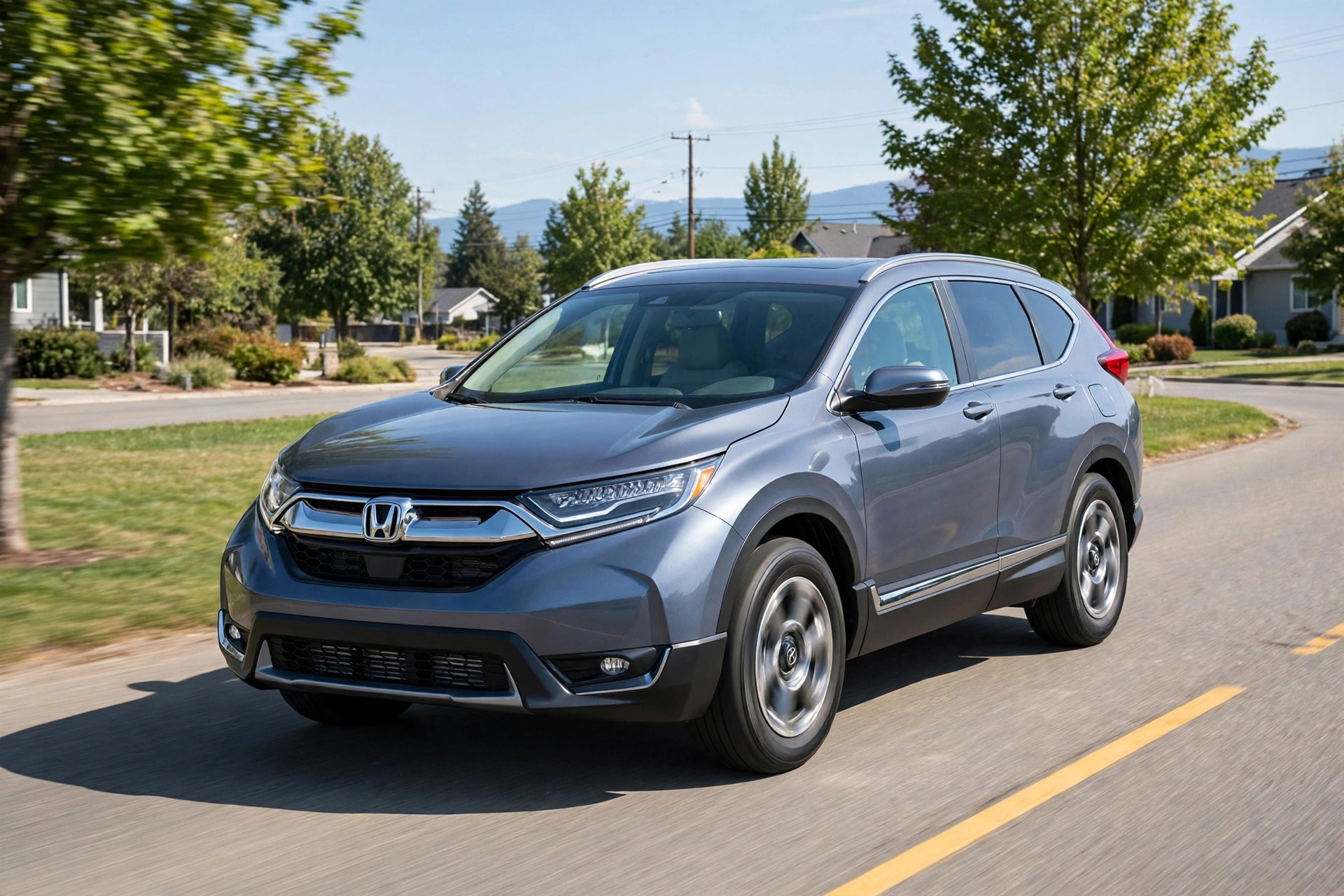
The Honda CR-V is America’s default family SUV for a reason, but the reason is not the sticker price. It is what happens after you buy it: the fuel bills, the insurance premiums, the maintenance visits, and — years later — what someone will pay you for it. Add those up over five years and the CR-V’s case gets stronger, but only if you buy the right version and skip the wrong extras.
Here is the ownership math, done honestly.
Fuel: where the hybrid earns its keep
The CR-V’s biggest running-cost decision is gas versus hybrid. The hybrid costs more up front, and whether it pays back depends almost entirely on how you drive. If your driving is mostly city traffic, school runs, and short trips, the hybrid’s advantage is large and the payback comes quickly, because that is exactly where hybrids save fuel. If your driving is mostly steady highway miles, the advantage shrinks, and the gas model may be the cheaper total purchase.
Do the math on your own mileage, not a reviewer’s. Take your annual miles, split them honestly between city and highway, and compare fuel costs for both versions at the gas prices you actually pay. Many buyers are surprised: the hybrid is a clear win for city-heavy drivers and a marginal one for highway-heavy drivers. Buying the hybrid for the badge rather than the math is how you spend more to save less.
One more fuel note: the CR-V runs on regular gasoline in its gas and hybrid versions, which keeps a lid on fuel costs compared with SUVs that demand premium. Over five years that difference alone is meaningful, and it is one of the quiet reasons the CR-V’s running costs stay low.
Insurance: the boring bill that varies more than you think
Insurance is the running cost buyers most often forget to price before signing, and it varies more between trims and versions than most people expect. Before you commit, get quotes for the exact trim you are considering and for the trim below it. Higher trims with more expensive parts and larger wheels can cost noticeably more to insure, and that gap compounds every year.
Your driving record, location, and coverage choices matter as much as the car, so use your own quotes, not averages from the internet. But as a rule, the CR-V sits in a reasonable insurance band for its class: it is a mainstream family SUV with strong safety ratings and widely available parts, both of which insurers like. The expensive insurance surprises in this class tend to come from luxury badges and rare parts, neither of which applies here.
Maintenance: predictable, with two things to watch
Honda’s reputation for reliability is earned, and the CR-V’s routine maintenance is straightforward: oil changes, tire rotations, filters, and fluid services on a schedule your dealer or independent shop can handle without drama. Over five years, routine maintenance costs are generally in line with other mainstream SUVs and well below luxury brands.
Two things deserve attention. First, tires: the CR-V’s tire size varies by trim, and larger wheels mean pricier tires. A full set is a significant expense that arrives sooner than many buyers expect, especially if you drive a lot. Ask about tire size and replacement cost when comparing trims — it is a real five-year cost difference hiding in an options list.
Second, the hybrid’s battery. Hybrid batteries are built to last the life of the car in most cases, and warranties on hybrid components are typically generous, but confirm the exact coverage on the specific vehicle and model year you are buying. A used hybrid without remaining battery coverage is a different financial proposition than one with it, and that difference should show up in the price.
Resale value: the CR-V’s secret weapon
This is where the CR-V quietly beats most of its rivals. Strong demand for used CR-Vs means they hold their value well, and that retained value is real money back in your pocket when you sell or trade in. A car that costs a little more up front but holds its value can easily be cheaper overall than a cheaper car that depreciates fast.
Three things protect resale value more than anything else: complete service records, a clean accident history, and a popular color and trim. Keep every receipt, fix damage properly, and think twice before ordering an unusual color or a rare option package that narrows your future buyer pool. The most popular CR-V configurations are popular for a reason — they are the easiest to sell later.
If you are buying used, the same logic works in reverse: a well-documented CR-V with full records is worth paying a bit more for than a cheaper one with gaps in its history. The cheapest used CR-V is rarely the cheapest to own.
Trims: the middle is usually the smart money
The CR-V lineup runs from well-equipped base models to loaded top trims, and the value curve is not a straight line. The base model covers the essentials, but the mid-level trims are where most buyers find the best balance: the safety and convenience features people actually use every day, without the luxury extras that add thousands and add little to resale.
Before stepping up a trim, ask which features you will genuinely touch daily. Heated seats, a power tailgate, and blind-spot monitoring earn their keep constantly. A premium audio system, a panoramic roof, or a hands-free tailgate may delight you — or may be forgotten within a month. Sit in both trims, use the controls, and decide with your hands rather than the brochure.
One feature worth prioritizing at any trim is the driver-assistance suite: automatic emergency braking, adaptive cruise control, and lane-keeping assistance are safety equipment that also makes long drives far less tiring. Confirm exactly what is included on the specific vehicle, since packages change by model year.
New, used, or certified: pick by total cost
A new CR-V gives you the full warranty, the latest features, and your exact color and options, at the highest price and the fastest early depreciation. A certified pre-owned CR-V — inspected by the manufacturer with extended warranty coverage — is often the best value, especially at two to four years old, when the steepest depreciation is behind the car but warranty life and modern safety features remain.
An ordinary used CR-V is the cheapest to buy and the riskiest to own. Without certification, a pre-purchase inspection by an independent mechanic is essential, and the service history matters even more. Whatever route you choose, compare total cost, not just purchase price: purchase price minus expected resale value plus fuel, insurance, and maintenance over your ownership period. That is the number that tells the truth.
The bottom line
The CR-V earns its popularity the boring way: reasonable fuel costs, reasonable insurance, predictable maintenance, and resale value that holds up. Buy the powertrain that matches your driving, the trim you will actually use, and the version whose total five-year cost — not just its sticker — fits your budget. Do that, and the default choice becomes the right choice.