Think about home safety and wellness and most people picture smoke detectors and bathroom grab bars. The largest object in the household safety picture is usually outside, weighs several tons, and gets no inspection at all: the mature tree over the roof, the driveway, or the kids’ swing set. Trees fail the way most household hazards do — gradually, then suddenly, on a windy night. Professional tree services exist for the gradual part. This guide covers how to read a tree’s warning signs, what a real assessment involves, and where the line sits between a Saturday project and a job for insured professionals.
Home safety and wellness begins with the warning signs a tree is becoming a liability
Dead branches in the upper canopy, especially large ones over targets like roofs and paths, are the most common red flag. Fungal growths at the base, cracks where trunks or major limbs join, a new lean, and roots lifting pavement all suggest structural trouble. So does a history of dropped limbs in calm weather. The Arbor Day Foundation’s tree care tips walk through basic tree health and maintenance for homeowners, and they are a sensible first read — but use them to decide when to call someone, not to talk yourself out of it. A tree can look green and leafy while its trunk is hollowing out; foliage is a lagging indicator.
What a professional assessment actually covers
A qualified arborist evaluates the whole system: root flare and soil, trunk integrity, branch structure, canopy balance, and the “targets” underneath — anything the tree could hit. The Tree Care Industry Association represents the professional side of this work and maintains standards and accreditation for tree care companies, which gives homeowners a way to check whether a firm follows industry practice rather than improvising. A good assessment ends in options, usually in this order: monitor, prune to reduce weight and remove deadwood, cable or brace a weak union, or remove the tree. Removal should be the last resort presented with reasons, not the first product sold.
Why this work is priced like the risk it is
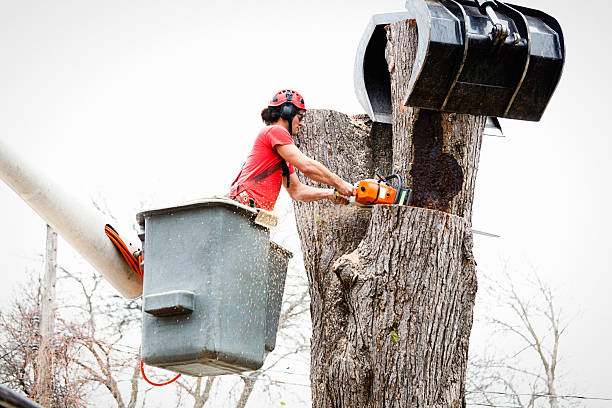
Tree work sits near the top of occupational hazard lists. The Occupational Safety and Health Administration maintains a dedicated tree care industry page because the job combines chainsaws, heights, rigging under load, and falling wood — a mix that injures amateurs with grim regularity. That risk profile is exactly why legitimate companies carry liability insurance and workers’ compensation, why their quotes look different from a door-knocker with a pickup, and why you should ask for certificates before anyone climbs. It is also why the DIY line is bright: pruning small, reachable branches from the ground is homeowner territory; anything involving a ladder, a chainsaw overhead, or wood over a structure is not.
Wellness is the other half of the ledger
The safety case for removal gets the attention, but healthy trees are wellness infrastructure. They shade roofs and cut cooling loads, soften noise, give children a reason to be outside, and anchor the curb appeal that props up a home’s value. The goal of an assessment is keeping those benefits safely, which is why planting choices matter too: the right species, in the right spot, far enough from foundations and lines. Households planning outdoor projects often think in the same whole-property terms — our guide to careers in fence installation covers the boundary side of the yard, while careers in home repair looks at the trades that maintain everything inside the fence line.
After the storm: the 48-hour protocol
When a storm does test your trees, the order of operations matters. First, treat every downed limb as guilty until proven innocent: keep people and pets away, and assume any branch touching a line is energized until the utility says otherwise — the utility, not a tree crew, is the first call when wires are involved. Second, photograph everything before cleanup, from several angles, for the insurance file; carriers pay documented claims faster than remembered ones. Third, resist the door-knockers who materialize with chainsaws before the rain stops; storm-chasing crews are the industry’s least insured, least accountable segment, and the emergency premium they charge buys speed you usually do not need once the immediate hazards are fenced off. A tree resting on a roof is urgent — tarping and stabilization yes, full removal quotes signed under duress, no. Get the assessment, then the removal, in that order, from a company you chose rather than one that chose you.
Putting it on the household maintenance calendar
Treat trees like the roof: inspected on a cycle, not after a scare. A walk-around every season — looking up for deadwood, down for fungi and root changes — takes ten minutes. A professional assessment every few years, and after any major storm, catches what the walk-around cannot. Budget-wise, preventive pruning is the tree equivalent of the small repair that prevents the big one; homeowners weighing larger property projects may also find our explainer on grants for bathroom remodels useful for the indoor side of the same safety-first logic, since both are about fixing hazards before they become emergencies.
The bottom line
Home safety and wellness is a whole-property discipline, and the trees are its biggest moving part. Learn the warning signs, get a standards-based assessment before a storm makes the decision for you, hire insured professionals for anything overhead, and keep healthy trees healthy — they are paying rent in shade, air and value. The cheapest tree work is the work done on your schedule. The most expensive kind arrives at 2 a.m., through the roof, on the weather’s schedule instead.