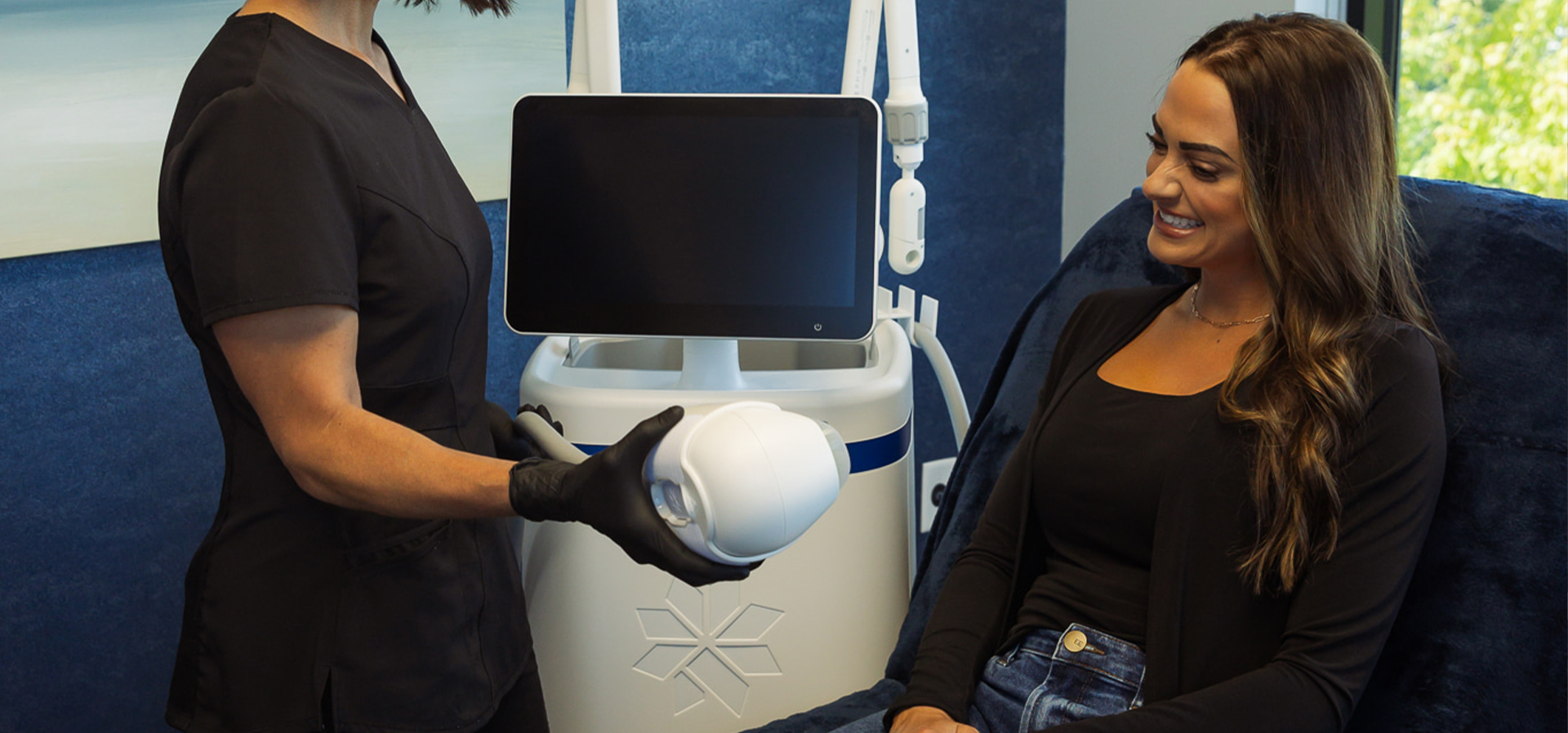
Every advertisement for fat freezing is built on the same pair of photographs. A clinical trial is built on something less flattering and far more honest: a measuring protocol. CoolSculpting clinical trials exist to answer the questions a photo cannot — how much fat actually leaves a treated area, how long the change lasts, which bodies respond, and what the treatment feels like over the weeks after the applicator comes off. If you are considering joining one, it helps to understand that from the research team’s side of the clipboard, you are not a makeover. You are a data set with a pulse, and that is exactly what makes a good study worth joining.
What the research is still trying to pin down
The underlying technique, cryolipolysis, uses controlled cooling applied through the skin to injure fat cells, which the body then clears gradually over the following weeks. The device family is already in everyday clinical use, so today’s studies tend to ask narrower questions than the first ones did: How well does a new applicator shape work on a particular area? How do results differ between the abdomen, the flanks, the thighs, or under the chin? What happens when treatment is paired with ordinary exercise, and what happens at a year rather than at three months? Some studies compare treated and untreated areas on the same person, which is a quietly elegant design — your own body supplies the control. Reading a listing with those questions in mind is the same skill used for any study, as our overview of breast cancer clinical trials explains in a very different corner of medicine.
Measurement is the whole game
A serious fat-reduction study cannot simply ask participants whether they look slimmer. Teams build a measurement stack before the first volunteer is treated: standardized photographs taken at fixed distances and lighting, circumference measurements at marked points, skinfold caliper readings, and in many studies ultrasound imaging to estimate the thickness of the fat layer itself. Weight is tracked constantly, not because the treatment is expected to change it — fat freezing is a contouring method, not a weight-loss one — but because a volunteer who loses ten pounds mid-study would muddy every other number. Expect to be asked to hold your weight, diet, and exercise routine steady for the study’s duration. That discipline is the unglamorous price of producing results anyone can trust, and it is similar to the careful baselines described in our look at insomnia clinical trials, where the diary matters as much as the drug.
Who studies recruit — and who they turn away
Eligibility lists for these trials tend to be specific for practical reasons. Researchers usually want adults whose weight has been stable, with a pinchable layer of fat in the target area, and no recent cosmetic procedures there. People with certain cold-sensitivity conditions are excluded for safety, since the treatment works by chilling tissue; people planning pregnancy or major weight change are usually asked to wait, because either would wreck the measurements. None of this is a judgment about who deserves treatment — it is about who produces interpretable data. If you are screened out, the honest reading is that the study was built narrowly, not that you failed a test. Volunteers whose main goal is significant weight loss are generally steered elsewhere, toward the kind of research covered in our guide to obesity clinical trials.
What participation actually involves, visit by visit
The rhythm is predictable. A screening visit covers your history, the measurements above, and photographs. The treatment visit itself involves the applicator being placed on the target area, a period of intense cold and pulling sensation that most descriptions say eases as the area numbs, and a massage of the treated tissue afterward. Somewhere in that first visit, expect a conversation about what you must not change. Teams typically ask participants to avoid starting a new diet program, a new exercise regimen, or another cosmetic treatment in the area mid-study, and many hand you a simple log for weight and any symptoms between visits. This is not fussiness: every new variable you introduce is a question mark over the data, and a participant who quietly trains for a marathon in month two can accidentally become the study’s loudest confounder. Honest logging — including the week you slipped — is more valuable to researchers than perfect behavior, because it lets them interpret your numbers instead of guessing at them. Then comes the part advertisements skip: the follow-up calendar. Because the body clears injured fat cells slowly, results are judged over months, and follow-up visits repeat the photographs and measurements on schedule. Temporary numbness, redness, tingling, and firmness in the treated area are the commonly reported experiences in those follow-ups; the research team will want to hear about all of them, in detail, at every visit. Your after-visit notes are not paperwork — they are the safety data.
How to find CoolSculpting clinical trials and the red flags to respect
Start at the public registry, ClinicalTrials.gov, and search the condition and treatment names; every legitimate listing names its sponsor, its sites, and its eligibility criteria in plain view. Background reading helps too: MedlinePlus’s overview of plastic and cosmetic surgery and the American Academy of Dermatology’s page on fat removal both describe where non-surgical fat reduction fits among the options. Then apply the simplest red-flag test in all of research participation: a genuine study does not charge you for the treatment being studied. Offers that blend a “trial” with a sales package, pressure you to decide the same day, or promise specific inches lost are marketing wearing a lab coat. The studies worth your body are the ones that talk about measurements before they talk about mirrors.